
Discovery & diagnosis · Essay 090
A decision workshop needs authority in the room
The Accidental Salesman Editorial Desk · 2 min read · Published 15 October 2026
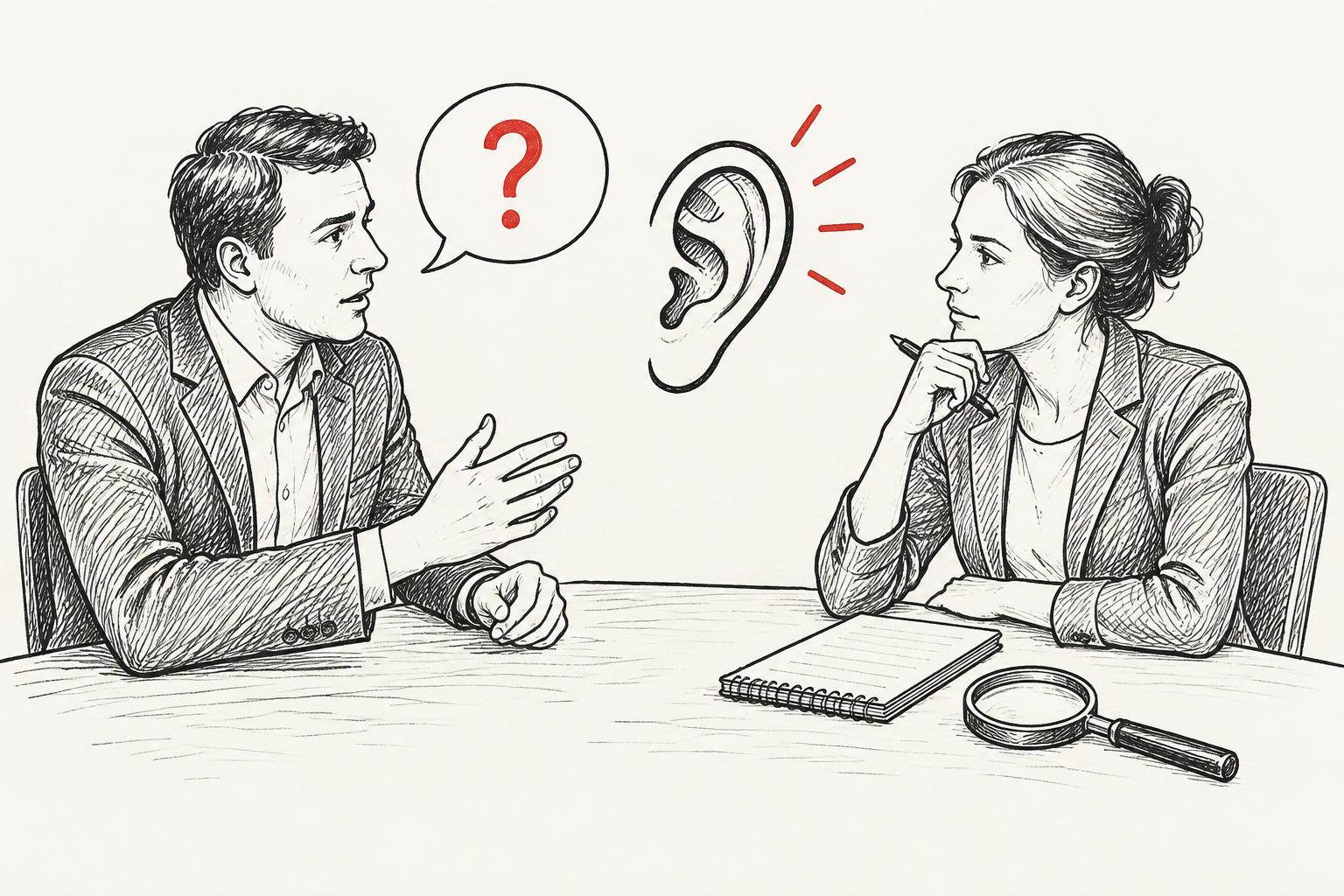
A workshop can clarify options and still fail to produce a decision if the relevant authority is absent. Participants generate useful discussion, then discover that the real choice must be made elsewhere under different criteria.
Define the intended output before inviting people. Is the workshop exploring the problem, recommending an option or authorising action? Each requires different participants and preparation. Calling all three a strategy session conceals the distinction.
Identify who can decide, who must contribute expertise and who will implement the outcome. If the decision-maker cannot attend, agree how the recommendation will be reviewed and what information they need. Do not promise closure the session cannot deliver.
Provide enough pre-reading to avoid spending the meeting reconstructing basic facts. Keep it focused on the choice, alternatives, evidence and unresolved questions. Participants should know what they are being asked to consider.
During the session, separate missing information from disagreement. Missing information may require a follow-up task. Disagreement may require an explicit tradeoff or escalation. Neither is resolved by filling a whiteboard with more ideas.
End with a decision record, including any deferred choice and its owner. A useful workshop can legitimately conclude that more evidence is needed, provided that conclusion leads to a bounded next step rather than another open-ended meeting.
Put it to work
A practical next step
Put the decision, authority and required evidence at the top of the workshop brief. Confirm them with the sponsor before scheduling. Use the final fifteen minutes to record outcomes and unresolved responsibilities.
Proposed practice, not a completed experiment. Illustrations are not client testimony.
Sources & limits
This essay is editorial interpretation from the supplied manuscript, not an empirical research report. No external study is cited for its recommendations.
Source: The work of winning trust, editorial review edition, 15 October 2026, p. 107. No publication history is inferred from its sequence dates.