
Discovery & diagnosis · Essay 015
A good discovery call changes the question
The Accidental Salesman Editorial Desk · 2 min read · Published 15 October 2026
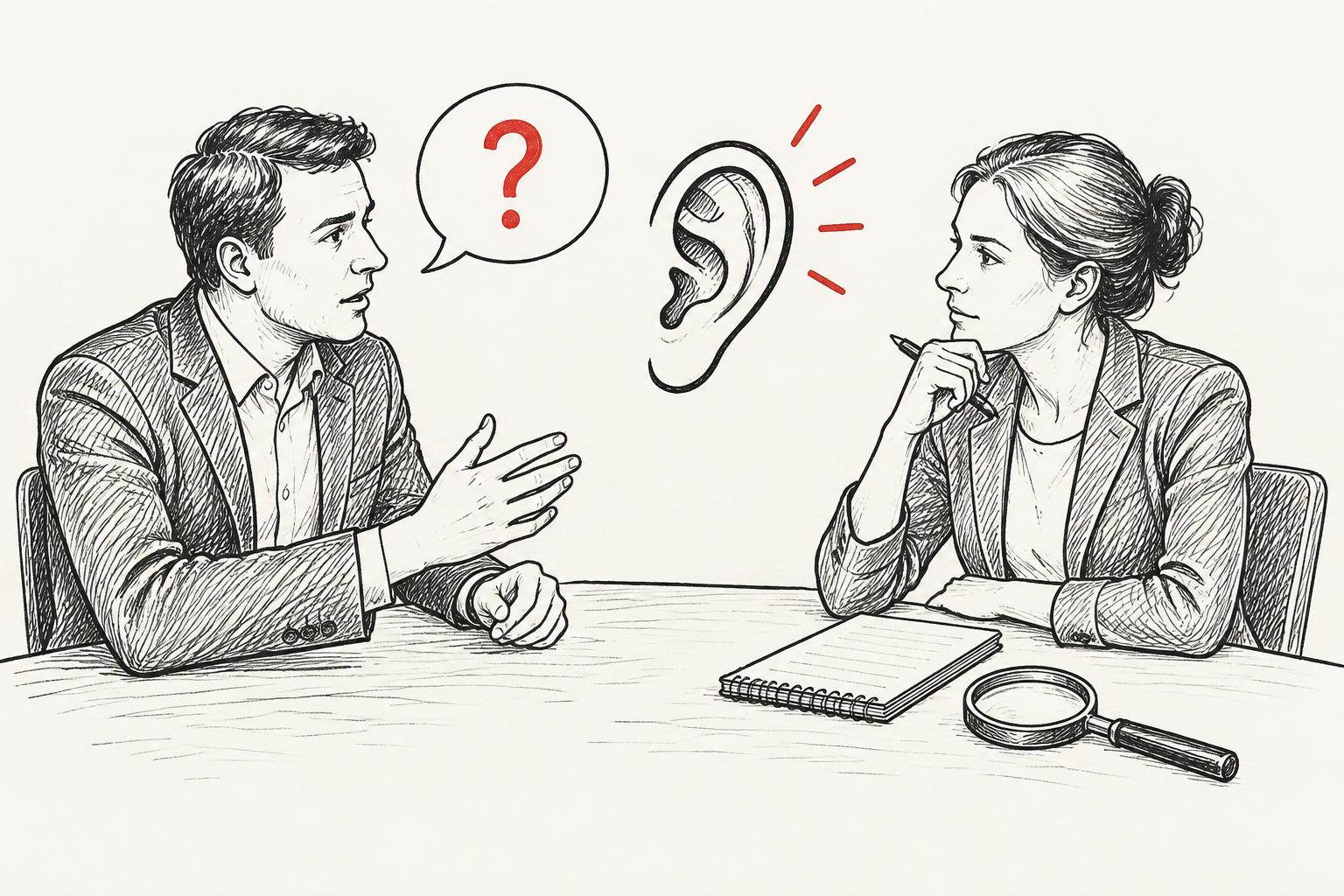
A discovery call that merely collects requirements may leave the buyer's original framing untouched. Sometimes that is appropriate. Often, the most useful outcome is a better question.
"Which CRM should we buy?" might become "Why are agreed next steps not recorded or followed?" "How do we generate more leads?" might become "Which enquiries are worth responding to?" The revised question can alter the scope, the owner and the kind of help required.
The adviser should earn that change through evidence. Ask for a recent example, trace what happened and explore the consequence. Resist the urge to name a familiar problem before the buyer has finished describing an unfamiliar situation.
One detailed incident is often more informative than a collection of abstract opinions. Who did what? Where did the process stop? What information was missing? Which workaround appeared? These questions reveal the operating context behind words such as "inefficient" or "misaligned".
At the end, summarise the problem as you now understand it and invite correction. If the buyer disagrees, explore the difference. Agreement produced by politeness is a weak foundation for an engagement.
Discovery has boundaries. You do not need to solve the whole problem in the initial meeting. You need enough shared understanding to decide whether further investigation or a defined engagement makes sense. A more accurate question is a worthwhile commercial outcome even when it leads away from your original offer.
Put it to work
A practical next step
Ask for one recent instance of the problem in the next discovery call. Compare what that example reveals with the initial brief. Document the revised question before proposing work.
Proposed practice, not a completed experiment. Illustrations are not client testimony.
Sources & limits
This essay is editorial interpretation from the supplied manuscript, not an empirical research report. No external study is cited for its recommendations.
Source: The work of winning trust, editorial review edition, 15 October 2026, p. 24. No publication history is inferred from its sequence dates.