
Tools & judgment · Essay 081
Decide what remains the adviser's responsibility
The Accidental Salesman Editorial Desk · 2 min read · Published 15 October 2026
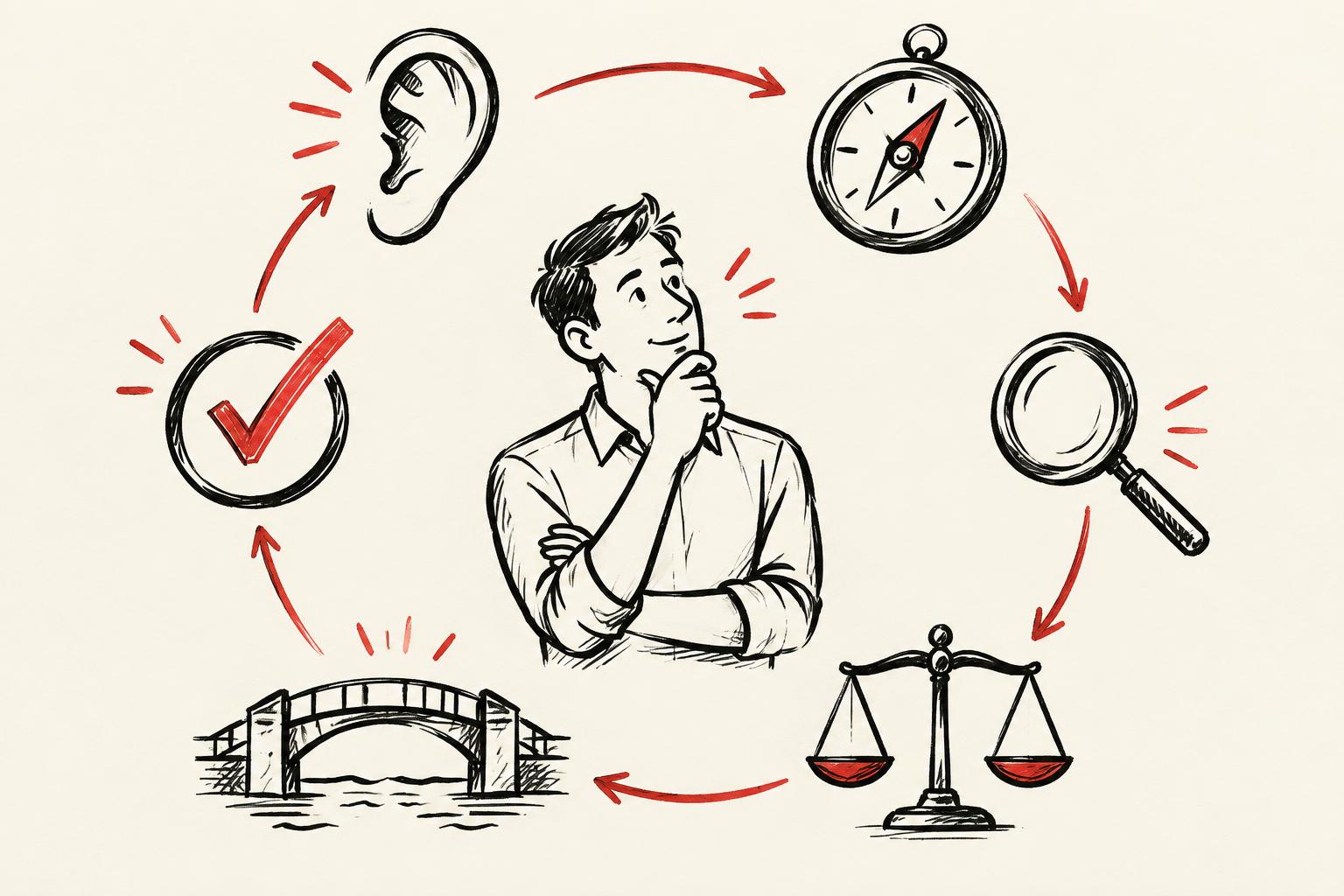
Automation can support research, drafting and coordination, but the client still needs someone accountable for the recommendation. A workflow that obscures that responsibility makes the service harder to trust when something goes wrong.
Identify the consequential decisions: what problem to address, which evidence to rely on, what to promise and whether the engagement is suitable. Assign a responsible person to each. The allocation should be clear internally even when the client does not need every implementation detail.
The adviser should be able to explain the reasoning behind the recommendation without appealing to the authority of a tool. If the answer cannot be defended, it is not ready to become professional advice merely because it is well written.
Maintain a correction route. When an error is discovered, who assesses the impact, informs affected people and updates the record? A responsible service includes the ability to repair mistakes rather than only the ability to produce work quickly.
This can become part of the commercial promise. Buyers can be told how the firm verifies important claims, reviews deliverables and handles uncertainty. Those practices are more meaningful than broad assurances that the firm uses the latest technology.
The lasting value of an adviser lies partly in accepting responsibility for judgment under imperfect information. Tools can improve that work. They do not remove the need for someone to own it.
Put it to work
A practical next step
Build a responsibility map for the assisted workflow. For every output that could influence a client decision, identify the approving person, required checks and correction route.
Proposed practice, not a completed experiment. Illustrations are not client testimony.
Sources & limits
This essay is editorial interpretation from the supplied manuscript, not an empirical research report. No external study is cited for its recommendations.
Source: The work of winning trust, editorial review edition, 15 October 2026, p. 97. No publication history is inferred from its sequence dates.