
Discovery & diagnosis · Essay 013
The cost of doing nothing needs a baseline
The Accidental Salesman Editorial Desk · 2 min read · Published 15 October 2026
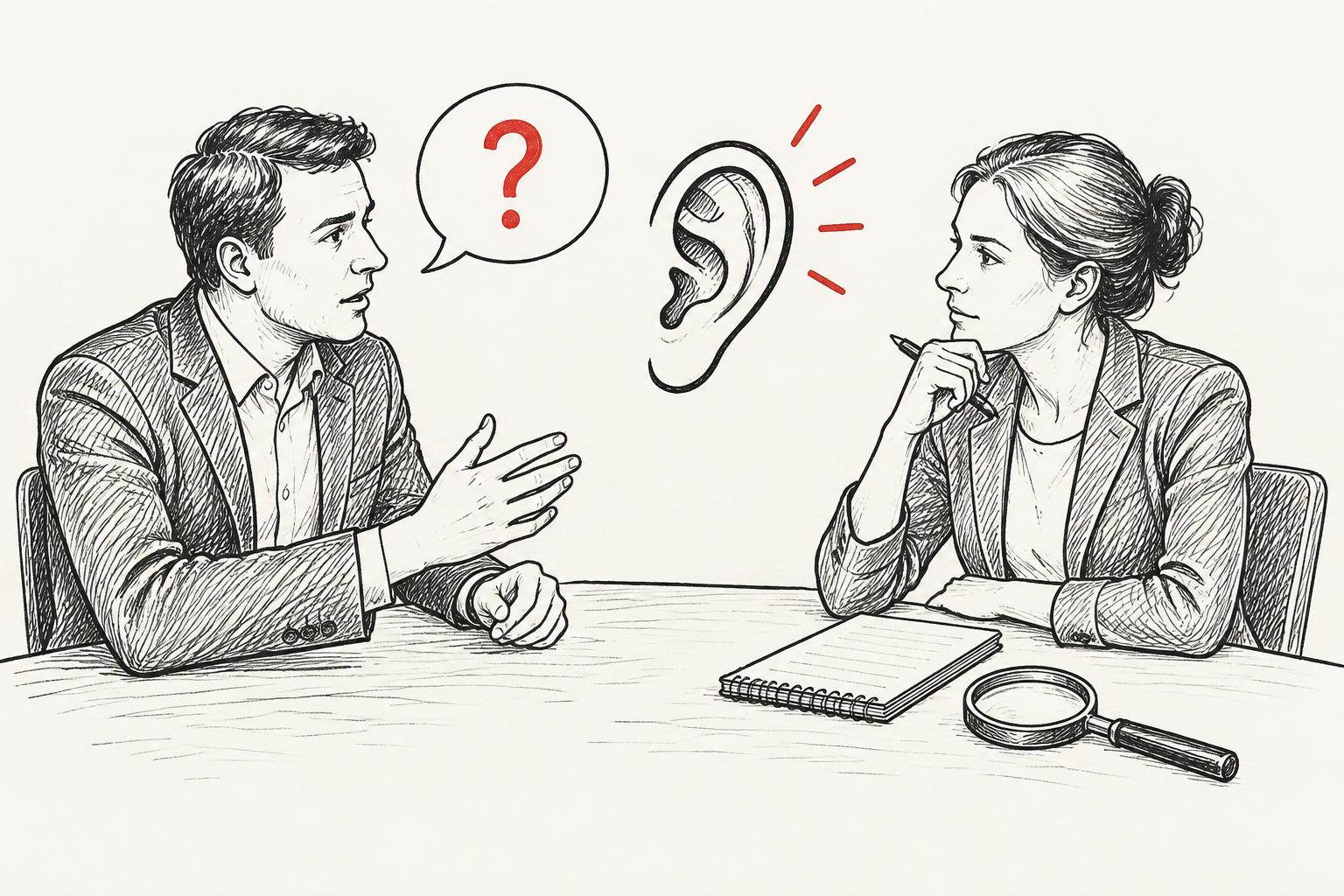
Sales proposals often attach an impressive number to inaction. The arithmetic can look precise even when its inputs are guesses. A buyer who notices the weakness may discount the entire recommendation.
Begin with something observable. How often does the problem occur? What resources does it consume? Which costs would actually disappear if it improved? Distinguish cash savings, released capacity and avoided risk. They are different benefits and should not be added together casually.
Consider an illustrative team spending ten hours a week correcting errors. Removing the errors does not automatically save ten hours of salary. It may create capacity for other work. To turn that into a financial benefit, explain how the capacity will be used or which expense can genuinely be avoided.
Use ranges where inputs are uncertain. A low, central and high scenario can reveal which assumption drives the conclusion. Invite the buyer to replace your assumptions with operating data. That conversation may be more valuable than the initial calculation.
Include the cost of change as well: training, management time, parallel running and disruption. Ignoring these makes the proposal easier to sell internally for a week and harder to defend later.
A sound business case survives a sceptical reading. Its purpose is to support a decision, including a decision not to proceed, rather than make the largest possible number appear on the page.
Put it to work
A practical next step
Build a simple baseline with the client's owner of the process. Label every input as measured, estimated or assumed. Recalculate the case using the least favourable plausible values before making a recommendation.
Proposed practice, not a completed experiment. Illustrations are not client testimony.
Sources & limits
This essay is editorial interpretation from the supplied manuscript, not an empirical research report. No external study is cited for its recommendations.
Source: The work of winning trust, editorial review edition, 15 October 2026, p. 22. No publication history is inferred from its sequence dates.