
Discovery & diagnosis · Essay 050
A demonstration needs a decision criterion
The Accidental Salesman Editorial Desk · 2 min read · Published 15 October 2026
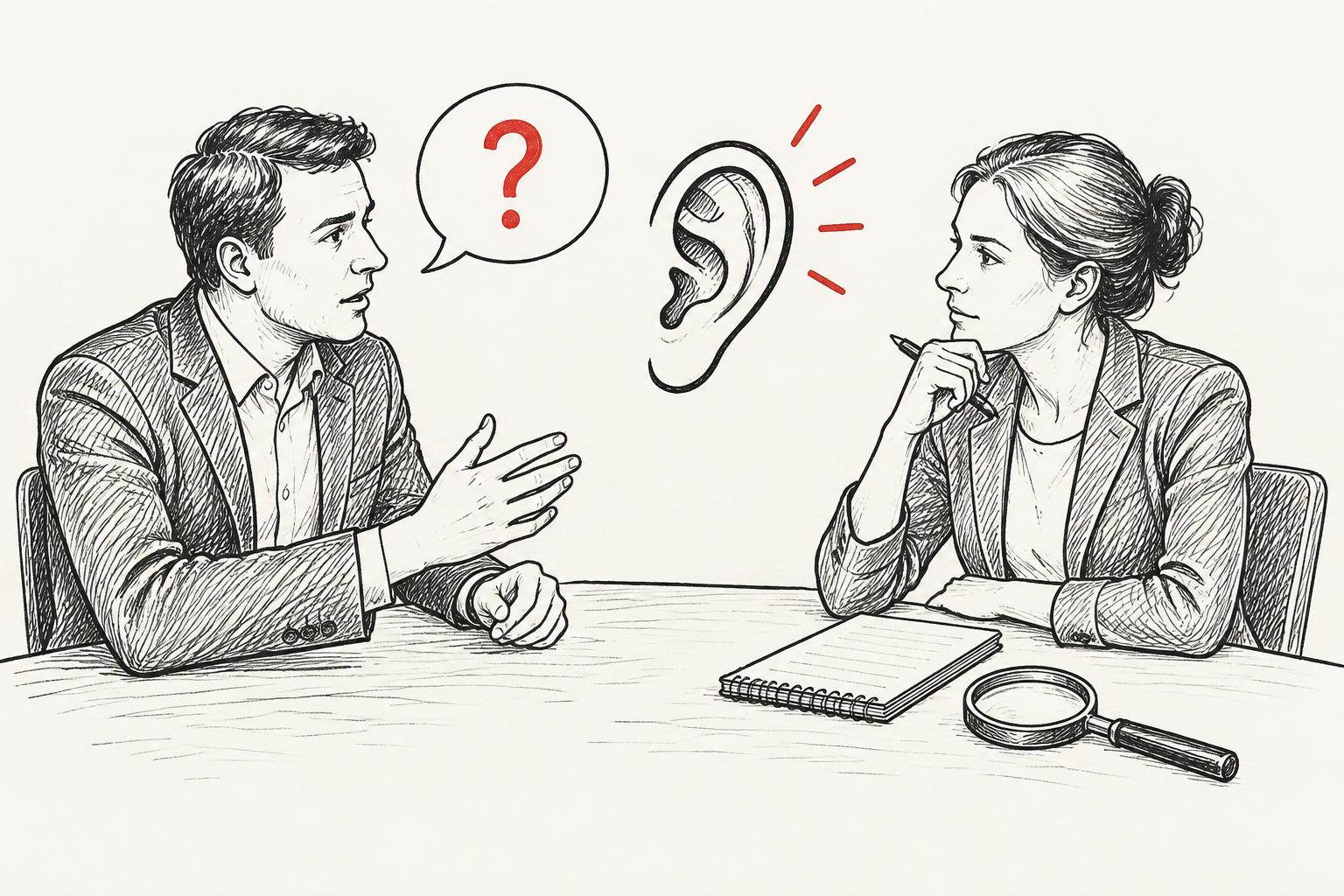
A demonstration can impress a room while leaving the purchase unresolved. The audience sees many capabilities but has no agreed way to judge whether those capabilities solve the problem that matters.
Before demonstrating, ask what the buyer needs to learn. Choose a realistic task, define the expected outcome and identify the conditions under which the demonstration would be unconvincing. This gives the session a purpose beyond showing breadth.
Use representative inputs where possible. A carefully prepared example may be appropriate for explanation, but disclose the preparation. Do not allow a rehearsed path to imply that unstructured real-world work will behave identically.
Show an exception as well as a smooth case. Buyers need to understand what happens when information is missing, the process changes or the output is wrong. A credible failure path can be more useful than another successful click-through.
Keep the discussion attached to the decision criterion. If a feature is interesting but irrelevant, note it for later. The buyer should leave knowing what was established, what remains uncertain and what further evaluation would be necessary.
For a service business, a demonstration might be a sample diagnostic, a worked decision or a review of an anonymised artefact. The same rule applies: demonstrate the quality of the work without implying that a small sample guarantees the outcome of a full engagement.
Put it to work
A practical next step
Agree one primary evaluation question before the session. End by recording evidence for and against proceeding, rather than asking only whether the audience liked the demonstration.
Proposed practice, not a completed experiment. Illustrations are not client testimony.
Sources & limits
This essay is editorial interpretation from the supplied manuscript, not an empirical research report. No external study is cited for its recommendations.
Source: The work of winning trust, editorial review edition, 15 October 2026, p. 63. No publication history is inferred from its sequence dates.