
Evidence & experiments · Essay 061
Compare approaches without arranging the winner
The Accidental Salesman Editorial Desk · 2 min read · Published 15 October 2026
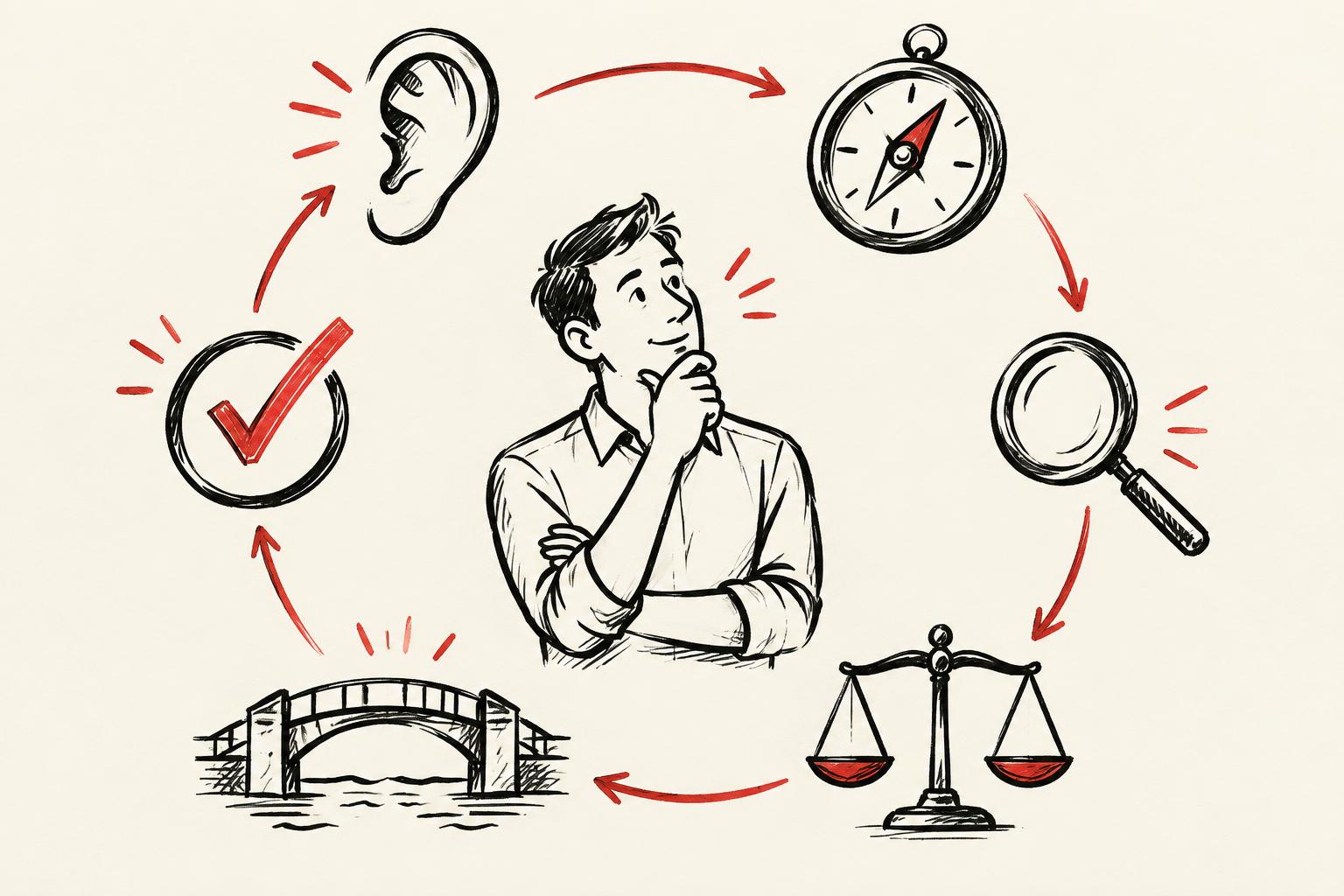
A comparison article can look independent while its criteria have been chosen to favour the author's preferred offer. The result may be persuasive to a casual reader but unhelpful to someone making a real decision.
Begin with the buyer's job and constraints. What must the approach accomplish? What resources are available? What risks are unacceptable? Criteria should follow from those questions before alternatives are scored.
Include the option of doing less, doing it internally or postponing. These may be poor choices in a particular situation, but excluding them can make an external purchase appear inevitable. Explain when each alternative is reasonable.
Use the same standard of evidence for every option. Do not compare your best case with a competitor's worst anecdote. Where information is unavailable, mark it unknown rather than treating absence as failure.
Weighting deserves attention. A low-cost solution may be preferable for a simple, reversible task even if it has fewer capabilities. A high-risk transition may justify more expensive support. A single overall score can hide these differences.
State commercial relationships and the boundaries of the comparison. If you sell one of the approaches, the reader should know. You can still offer useful judgment, but the reasoning needs to stand independently of your interest in the outcome.
Put it to work
A practical next step
Build a comparison matrix from a real buyer's requirements before entering supplier names. Ask the buyer to review the criteria and weights, then document unknowns rather than filling them with assumptions.
Proposed practice, not a completed experiment. Illustrations are not client testimony.
Sources & limits
This essay is editorial interpretation from the supplied manuscript, not an empirical research report. No external study is cited for its recommendations.
Source: The work of winning trust, editorial review edition, 15 October 2026, p. 75. No publication history is inferred from its sequence dates.