
Discovery & diagnosis · Essay 046
Discovery should separate symptoms from causes
The Accidental Salesman Editorial Desk · 2 min read · Published 15 October 2026
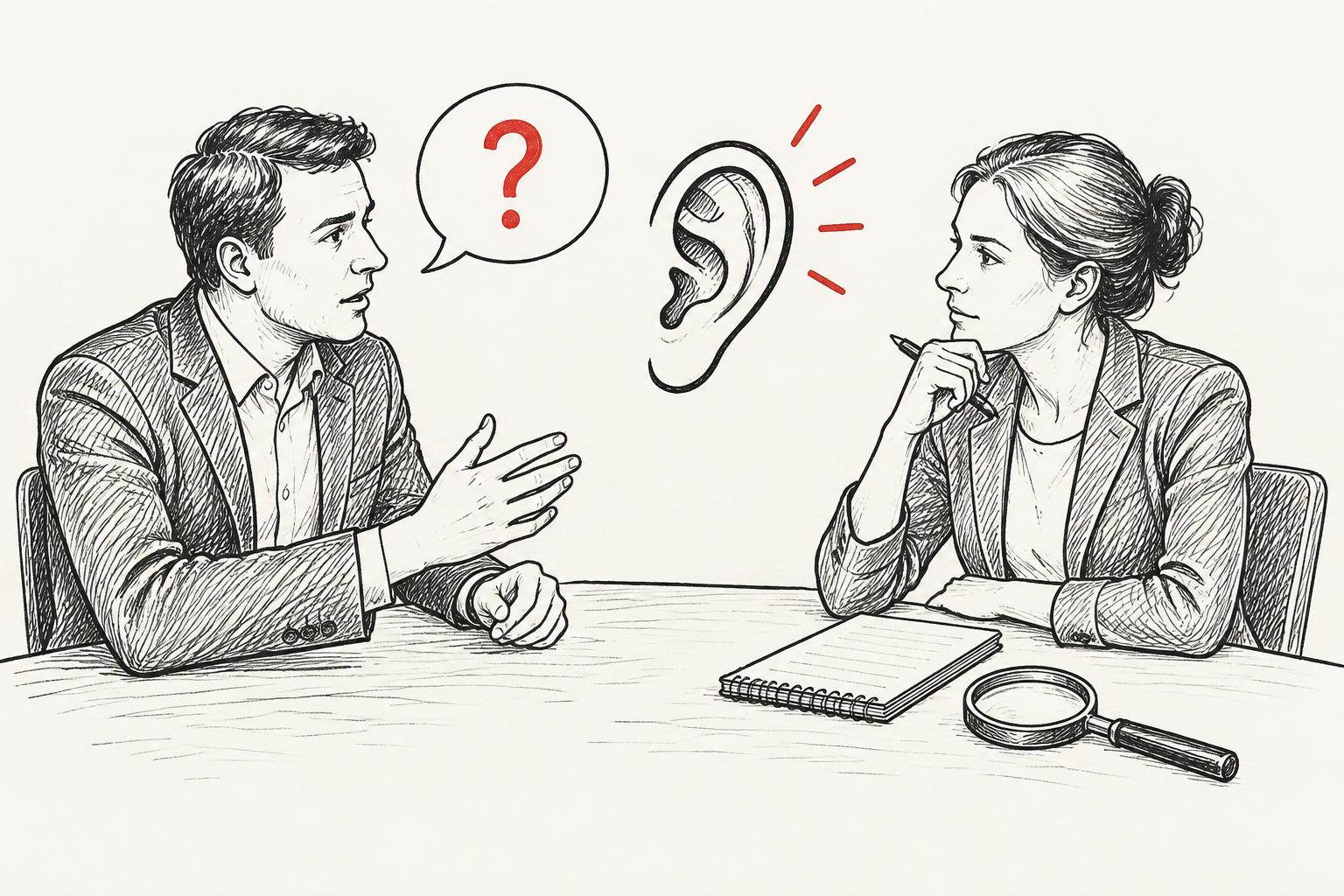
A buyer often arrives with a visible symptom: slow sales, poor adoption, late projects or rising costs. The adviser is tempted to recognise a familiar pattern and move quickly to a solution. Speed can be useful, but premature certainty makes the engagement vulnerable.
Trace the symptom through a recent example. A late proposal might reflect unclear requirements, unavailable technical staff or an approval process with no owner. Those causes call for different interventions even though the visible delay is the same.
Ask what happens when the symptom is absent. Comparing a successful instance with a failed one can reveal a meaningful difference. It may also expose the limits of the buyer's initial explanation.
Avoid claiming that a short discovery call establishes causality. It usually produces a working diagnosis and a plan for further investigation. State what evidence would strengthen or weaken that diagnosis.
The distinction matters commercially. If you sell a remedy before understanding the cause, you may become responsible for an outcome your work cannot influence. A more careful diagnosis can narrow the promise and make the proposal easier to defend.
There is a balance to strike. Endless investigation can become avoidance. Gather enough evidence for the next decision, explain remaining uncertainty and agree how it will be resolved. The appropriate depth depends on the cost and reversibility of being wrong.
Put it to work
A practical next step
Compare one successful and one unsuccessful instance of the same process. Identify the differences before naming a cause. Use the comparison to decide what additional evidence is worth collecting.
Proposed practice, not a completed experiment. Illustrations are not client testimony.
Sources & limits
This essay is editorial interpretation from the supplied manuscript, not an empirical research report. No external study is cited for its recommendations.
Source: The work of winning trust, editorial review edition, 15 October 2026, p. 59. No publication history is inferred from its sequence dates.