
Discovery & diagnosis · Essay 047
Questions need a purpose
The Accidental Salesman Editorial Desk · 2 min read · Published 15 October 2026
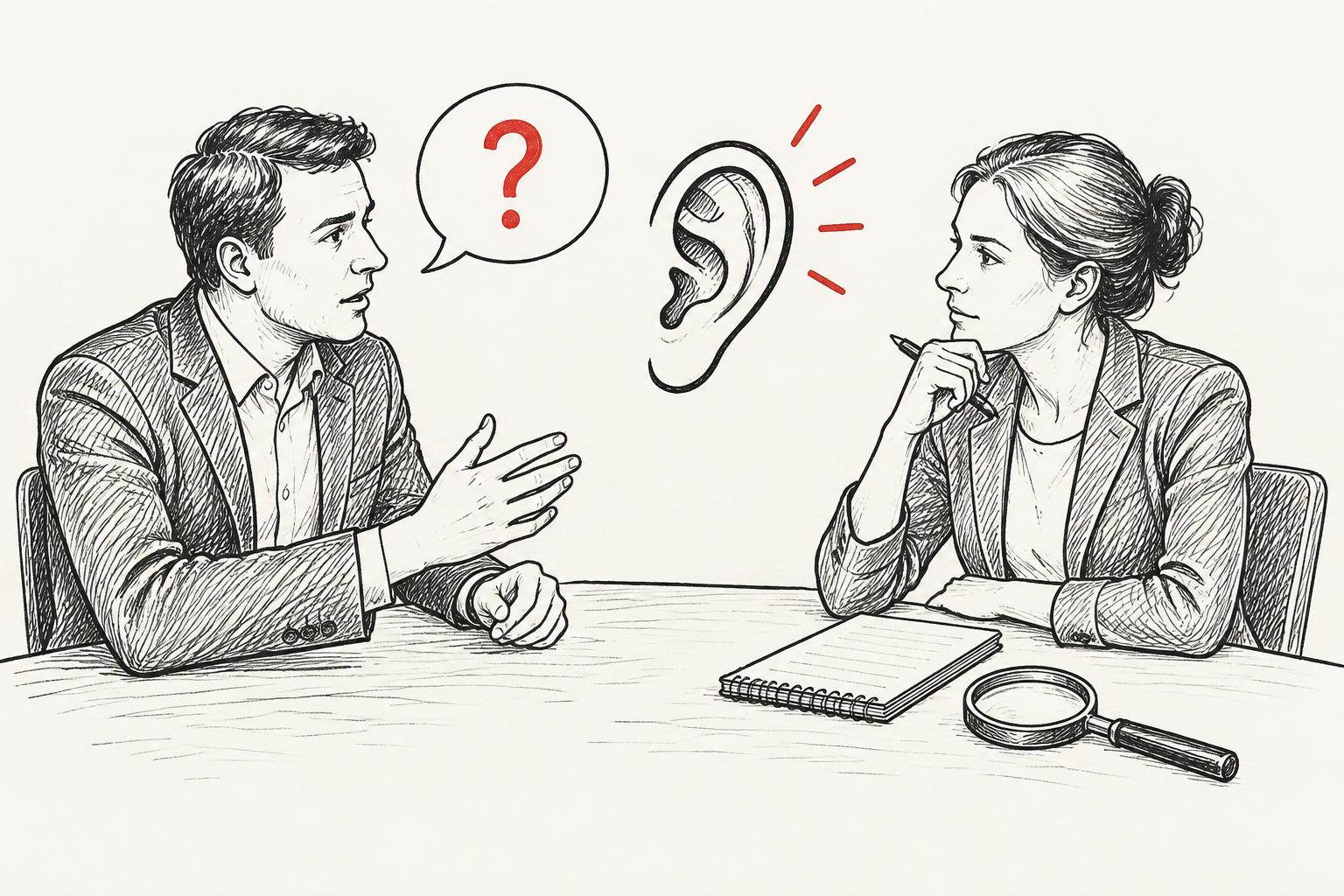
A long discovery questionnaire can feel thorough while collecting little that changes the recommendation. The buyer spends an hour answering, and the seller presents the same service they intended to sell at the beginning.
For every question, know what decision its answer could affect. A question about team size may alter delivery scope. A question about a previous attempt may reveal a constraint. A question about a deadline may determine whether the proposed approach is feasible.
Open questions invite explanation; closed questions can establish a fact or confirm a decision. Neither form is inherently superior. The skill lies in choosing the form that fits the moment and listening to the answer rather than moving through a script.
Follow the unexpected detail. If a buyer mentions that a previous initiative stopped when a sponsor left, the next useful question may concern ownership and continuity, not the next item on your prepared list.
Be transparent about sensitive questions. Explain why you need information about budget, internal disagreement or performance. The buyer should not have to guess whether the question serves diagnosis or merely negotiation.
At the end, show how what you learned changed your understanding. This is a practical test of whether the questions were useful. If nothing changed, either the initial view was unusually accurate or the conversation did not allow enough room for discovery.
Put it to work
A practical next step
Audit your discovery questions. Beside each, write the decision it informs. Remove questions with no clear use and prepare follow-ups for the answers most likely to change scope or feasibility.
Proposed practice, not a completed experiment. Illustrations are not client testimony.
Sources & limits
This essay is editorial interpretation from the supplied manuscript, not an empirical research report. No external study is cited for its recommendations.
Source: The work of winning trust, editorial review edition, 15 October 2026, p. 60. No publication history is inferred from its sequence dates.