
Tools & judgment · Essay 074
Faster writing does not resolve an unclear offer
The Accidental Salesman Editorial Desk · 2 min read · Published 15 October 2026
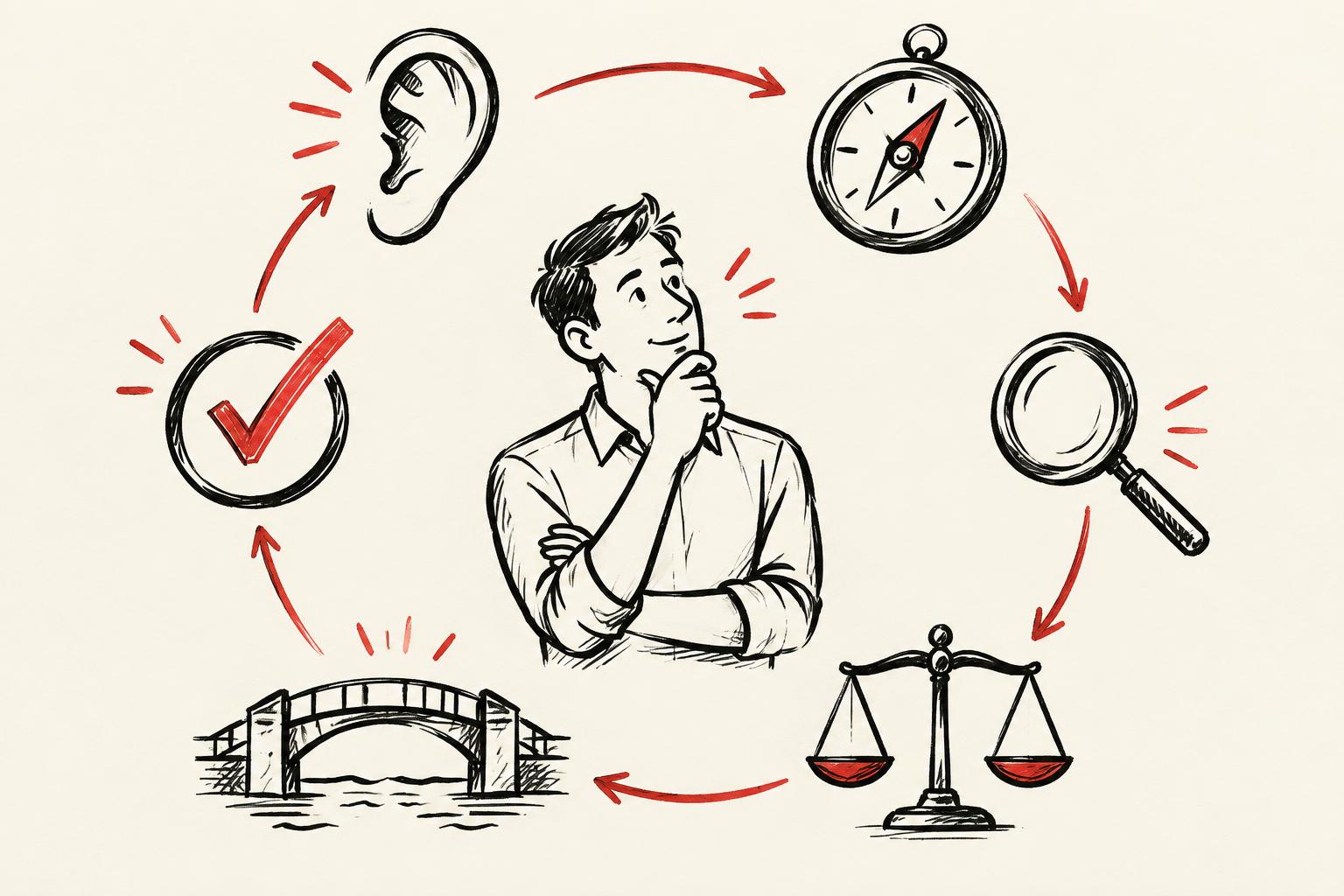
An assistant can turn rough notes into a polished proposal while leaving the commercial logic untouched. If the notes contain an unclear problem, an unsupported outcome and an ambiguous scope, the finished document may simply make those weaknesses harder to notice.
Resolve the offer before asking for prose. Write the buyer's decision, the intended outcome, the work included, the dependencies and the commercial terms in plain language. If these do not fit together, another draft is unlikely to solve the problem.
Use assistance for specific tasks: shortening an explanation, checking consistency or identifying unanswered questions. Ask it to point out unsupported claims rather than make the document sound more persuasive by default.
Review all commitments. A generated sentence can quietly turn an aspiration into a guarantee or a limited service into a broad promise. The person approving the proposal must understand the difference between what the firm hopes to influence and what it is agreeing to deliver.
Keep the buyer's language where it carries meaning, but do not manufacture quotations. If a phrase is your summary, present it as a summary. Accurate attribution matters even in a private commercial document.
The time saved on drafting should create space for stronger thinking and review. If it merely allows the team to send more weak proposals, the workflow has accelerated output without improving the buying decision.
Put it to work
A practical next step
Compare the final proposal against a five-line offer brief. Highlight every promise that appears only in the polished draft. Confirm, narrow or remove it before sending.
Proposed practice, not a completed experiment. Illustrations are not client testimony.
Sources & limits
This essay is editorial interpretation from the supplied manuscript, not an empirical research report. No external study is cited for its recommendations.
Source: The work of winning trust, editorial review edition, 15 October 2026, p. 90. No publication history is inferred from its sequence dates.