
Tools & judgment · Essay 075
Personalisation can become an expensive disguise
The Accidental Salesman Editorial Desk · 2 min read · Published 15 October 2026
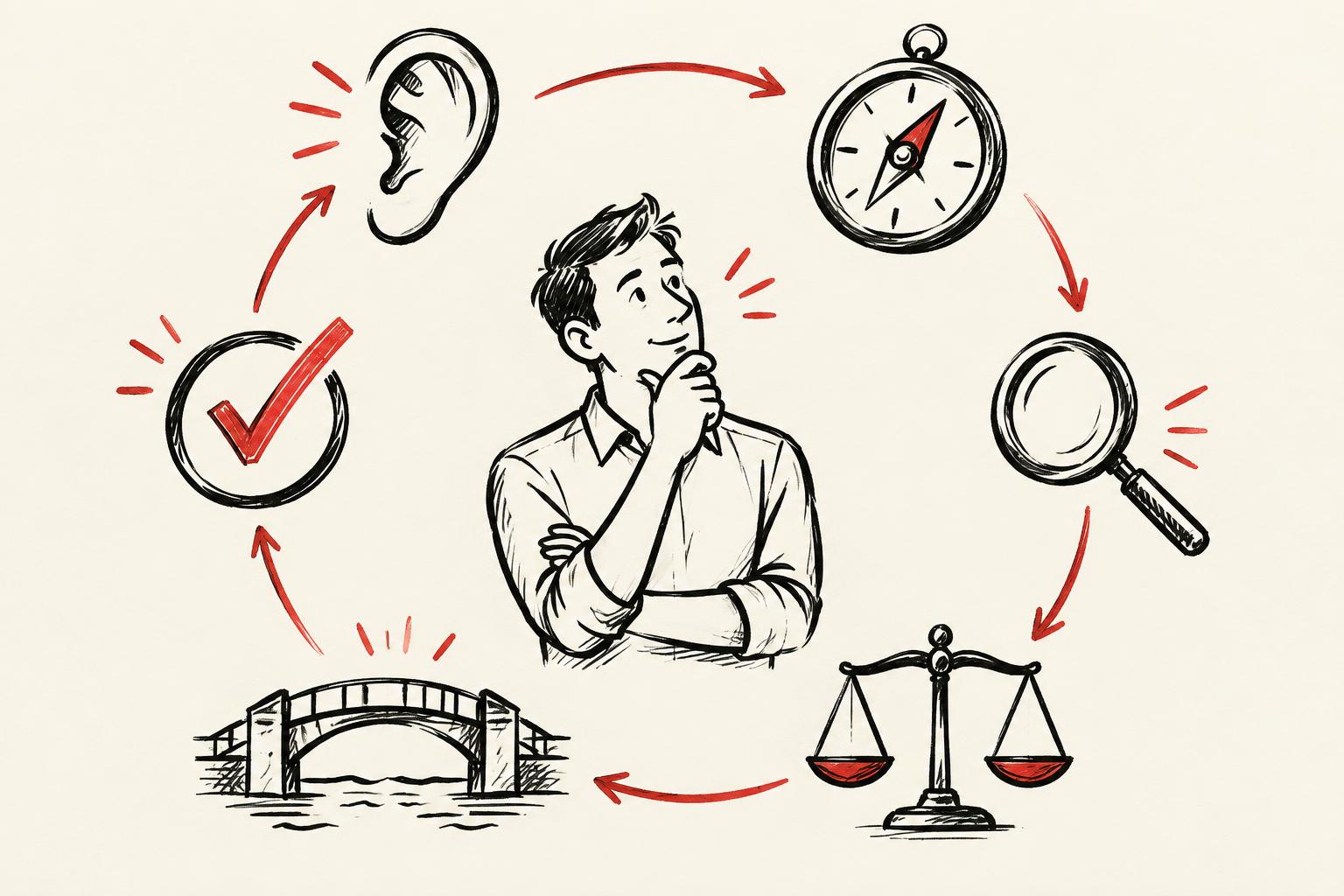
Automated outreach can mention a recipient's role, recent post and company announcement while still offering nothing relevant. The message looks individual, but the reason for contacting the person remains generic.
Distinguish personal detail from business relevance. A public hobby may be easy to insert. A credible explanation of why a particular operating problem could matter now requires more judgment. The latter is usually the stronger basis for a professional approach.
Do not imply familiarity you do not have. "I loved your recent article" should not appear unless someone actually read it and has a genuine point to make. Manufactured warmth can make an otherwise reasonable offer feel manipulative.
Use automation to organise verified information and draft alternatives. Keep a review step for the relevance claim, factual accuracy and appropriateness of the contact. More personal data is not automatically better preparation.
Measure the quality of replies and the consequences of errors. A campaign with more responses may also produce more irritation or unsuitable meetings. Include negative reactions and manual correction time in the assessment.
The most useful personalisation is often restraint: one accurate observation, one plausible question and one clear reason you may be able to help. A long display of research can feel less like attention and more like an attempt to prove access to the recipient's life.
Put it to work
A practical next step
Remove every personal detail from a draft and ask whether the business reason still stands. Restore only details that materially improve relevance and can be verified.
Proposed practice, not a completed experiment. Illustrations are not client testimony.
Sources & limits
This essay is editorial interpretation from the supplied manuscript, not an empirical research report. No external study is cited for its recommendations.
Source: The work of winning trust, editorial review edition, 15 October 2026, p. 91. No publication history is inferred from its sequence dates.