
Discovery & diagnosis · Essay 129
How to Prepare for a Sales Conversation: 7 Steps Every Salesperson Should Follow Before Meeting a Customer
The Accidental Salesman Editorial Desk · 7 min read · Published 19 November 2026
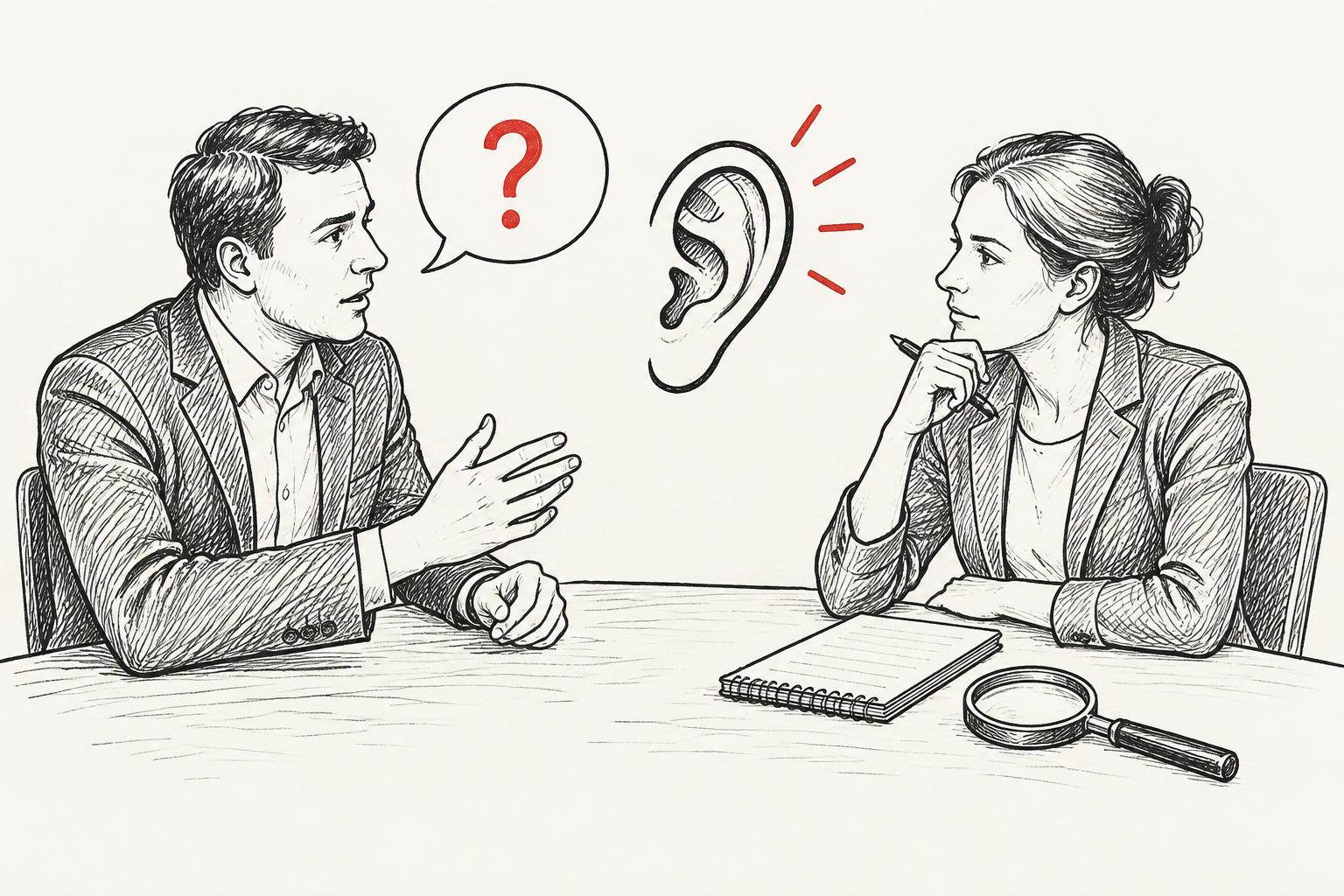
The customer has given you twenty minutes. You know your product, but do you know what would make those twenty minutes useful to them? Preparation starts with that question, not with deciding which slide to show first.
For a field representative, account executive or business development professional, good preparation creates room to listen. You arrive with relevant questions, accurate information and a plan that can change when the customer tells you something unexpected.
These seven steps are a practical routine, not a guaranteed closing formula. The examples are hypothetical US sales situations. This is AI-assisted editorial synthesis, not a claim of personal client experience.
Why an unprepared meeting can go wrong
A commercial-cleaning representative asks a facilities manager questions already answered in the meeting invitation. Later, the rep promises overnight staffing without checking availability. Neither mistake requires bad intentions. Both make the buyer wonder whether the same carelessness will follow the contract.
Preparation cannot remove every surprise. It can prevent avoidable confusion, protect customer time and help you distinguish a useful opportunity from a poor fit. Being ready also means knowing what you cannot responsibly promise.
A sales pitch is not a customer discussion
A prepared pitch answers, “What will I say?” A prepared discussion also asks, “What do I need to learn, and what might change my recommendation?” Slides and talking points can help, but they should not determine the conversation before the buyer speaks.
Adaptive-selling research links adjusting to customers with performance measures; it does not establish one winning script [R158]. Treat your plan as a route map, not a set of lines the customer must follow.
1. Research the customer and understand their situation
Start with authorized account notes, the meeting request and relevant public information. For a business buyer, check what the organization does, whom it serves and the contact’s responsibilities. For a home visit, review what the customer has chosen to share about the problem and property.
A packaging supplier visiting a regional food producer might review its product range and distribution model. That gives context, not proof that packaging costs are excessive. Write down what is confirmed, what is inferred and what you need to ask. Avoid intrusive personal research and outdated notes.
2. Identify likely needs without treating guesses as facts
Turn research into two or three working hypotheses. A growing distributor might struggle with order accuracy, warehouse capacity or delivery scheduling. You do not yet know which issue matters, whether it is urgent or whether your offer can help.
Prepare a neutral opening: “I noticed you added a distribution location. Has that changed how your team handles orders?” Let the answer redirect you. Do not announce, “You must need our system.” A hypothesis should make your discovery sharper, not make the buyer defend against your assumptions.
3. Set a clear, realistic objective
Choose an objective suited to the stage of the relationship. An initial visit might establish the problem and determine whether a technical assessment is worthwhile. A later meeting might compare a proposal against agreed requirements. “Close the deal” is not a useful objective for every conversation.
Separate your goal from the buyer’s agenda. Open with: “I’d like to understand the current process and see whether a demonstration would be useful. What would you like to cover?” Decide which next action would represent progress, while leaving room for a sensible no.
4. Prepare discovery questions, not a memorized monologue
Build a short question bank around the current situation, impact, constraints and decision process. Useful prompts include: “How do you handle this today?” “Where does it become difficult?” “Who is affected?” and “What would an acceptable improvement look like?”
For an HVAC appointment, “When is the upstairs uncomfortable?” is more useful than immediately recommending equipment. Technical diagnosis still belongs to qualified people. Follow the answers, summarize what you heard and ask what you missed. Listening research supports its importance to adaptation and relationships, not a universal question count or talk-time ratio [R9].
5. Connect product value to the customer’s problem
Know the offer’s relevant capabilities, limitations, implementation requirements and support terms. Prepare one explanation that connects a feature to a plausible customer need, then confirm that need before using it.
An account executive selling scheduling software could demonstrate how a dispatcher assigns a sample job, rather than describing “seamless efficiency.” Ask the buyer to identify the remaining work. Include training and setup. Potential time savings are not automatically payroll savings, and a demonstration is not proof of a guaranteed business result.
6. Anticipate pricing, timing and alternative objections
Prepare accurate information, not clever rebuttals. Check quote scope, authorized discount limits, delivery windows and what you can substantiate about alternatives. Never invent a competitor’s weaknesses or an installation date.
Rehearse clarification first: “When you say the price is high, are you comparing another proposal, your available budget or the value you expect?” For timing, ask what needs to happen before a decision. If you cannot confirm something, say who will check it and when you will respond. Respect a clear decline.
7. Practice the conversation and different responses
Ask a colleague to play a rushed owner, a skeptical procurement contact or a homeowner worried about disruption. Practice the opening, one discovery sequence and one difficult objection. Give the buyer a concern you do not know in advance, so the exercise tests listening rather than memory.
Then repeat the weak moment after specific feedback. Confidence should come from handling uncertainty more calmly, not from expecting every customer to cooperate. Behavior-modeling training research supports structured practice, while distinguishing learning, workplace behavior and business outcomes [R155].
How managers and AI can support preparation
Managers can review the meeting objective, challenge unsupported assumptions and confirm which commitments a representative may make. In roleplay, focus feedback on observable behavior: did the rep clarify the concern before answering? Keep the debrief constructive, then check whether the behavior transfers to appropriate real conversations.
Practis.ai is one example of an AI-powered sales training platform describing simulated customer conversations, objection practice and coaching feedback. Included here by request, it illustrates a way to rehearse before meetings, not an independently verified promise of better sales results [R157].
AI can offer additional practice when a colleague is unavailable, but its feedback needs checking against approved guidance. Use fictional or properly de-identified scenarios in authorized tools. NIST identifies confabulation and automation-bias risks; an AI score should not replace a manager’s judgment or customer evidence [R103].
Five useful FAQs
How long should preparation take? Match it to the meeting’s complexity and stakes. A short repeat visit needs a focused review; a technical proposal may require coordination across several colleagues.
What if I know little about the customer? Be transparent. Use the meeting request as your starting point and ask permission to understand the situation before recommending anything.
Should I memorize my opening? Know its purpose and practice saying it naturally. Memorize essential compliance wording when required, not an entire discovery conversation.
How do I prepare for an unfamiliar objection? Practice acknowledging uncertainty, asking a clarifying question and arranging a reliable answer. Improvising a promise is not confidence.
Can roleplay tell me whether I will close? No. It can reveal preparation gaps and improve rehearsal. Customer fit, priorities, resources and decisions remain outside the simulation.
Your pre-meeting sales preparation checklist
Research: have I reviewed relevant, authorized information and separated facts from assumptions? Needs: which hypotheses should I test? Objective: what would make this meeting useful to both sides?
Discovery: which questions will help me understand the situation? Value: can I explain the relevant benefit and limitations? Objections: have I checked pricing, timing, alternatives and my authority?
Practice: have I rehearsed the difficult moment and an honest answer when I do not know? Bring the checklist, then let the customer’s answers shape the conversation.
Put it to work
A practical next step
Before your next meeting, complete the seven-item checklist and rehearse one uncertain moment with a colleague. After the meeting, compare your assumptions with what the customer actually said and note one change for the next conversation.
Proposed practice, not a completed experiment. Illustrations are not client testimony.
Sources & limits
Publisher abstract reviewed: synthesis of 155 samples and more than 31,000 salespeople, including performance measures and a structural model. Meta-analytic associations do not establish randomized causal effects of the seven editorial corrections, a universal script or guaranteed deal outcomes.
Meta-analysis of 117 training studies, with effects differing across learning, job behavior and business results. Not an AI sales-roleplay trial, field-sales conversion estimate or validation of a vendor; recommendations are editorial applications of the abstract.
Current official descriptions of scenarios, approved rubrics, coaching observations, analytics and industry contexts. Included by request as a neutral example, not an independently ranked recommendation. No hands-on test, scoring validation or customer-outcome audit performed; actual package and data terms require confirmation.
Voluntary cross-sector risk guidance on confabulation, privacy and automation bias; not a sales-specific law, certification or guarantee that reviewed AI output is accurate.
Meta-analytic model of salesperson listening; associations and synthesized relationships do not establish that an example email causes better outcomes.
Editorial synthesis published 19 November 2026. Research is linked above; examples and the practical exercise are editorial applications, not reported outcomes.