
Clients & capability · Essay 071
Sales coaching needs observable work
The Accidental Salesman Editorial Desk · 2 min read · Published 15 October 2026
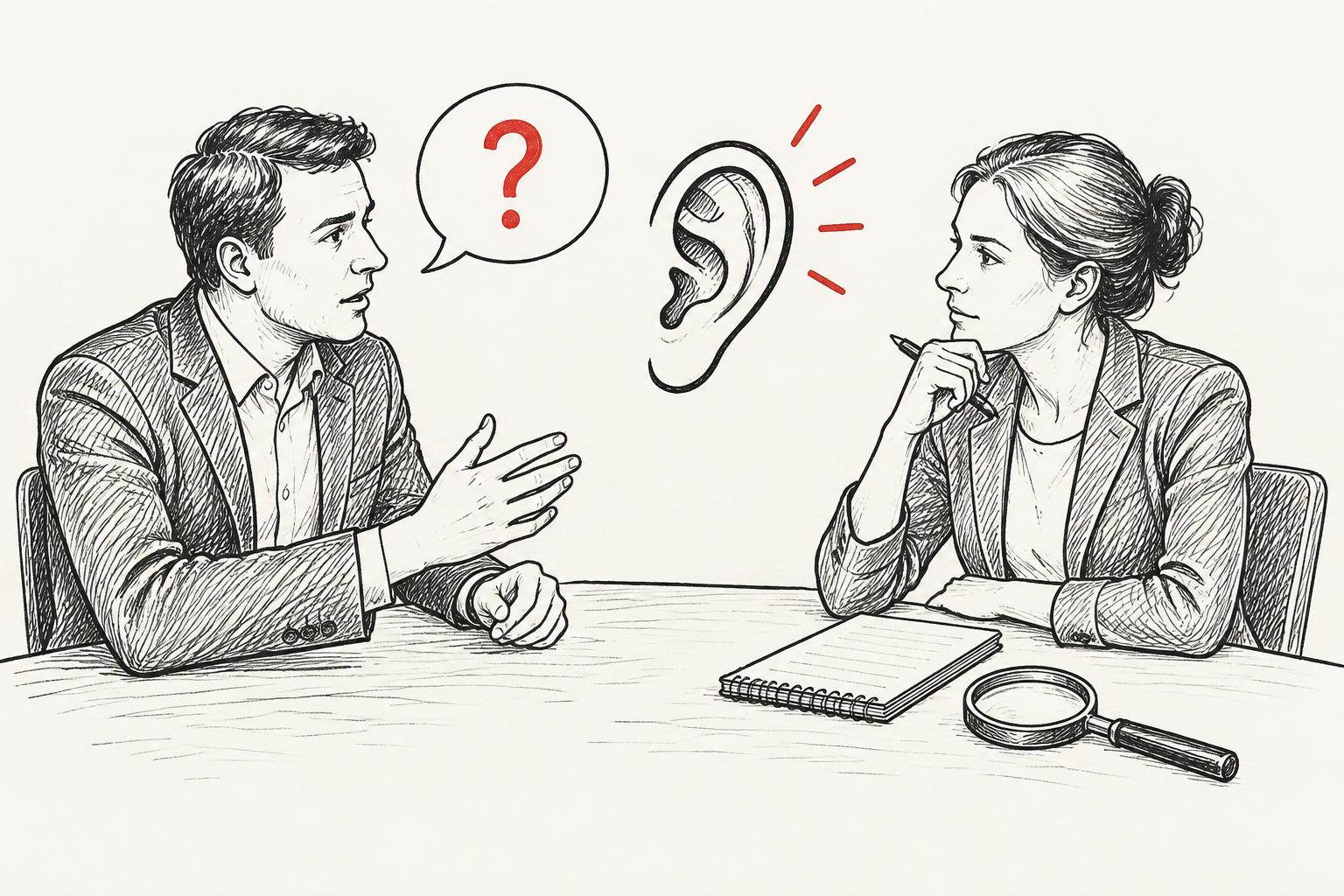
General advice such as "ask better questions" or "be more confident" gives a salesperson little to practise. Effective coaching starts with an observable moment and a specific alternative.
Use a real artefact where permission allows: a proposal, meeting note or recorded practice conversation. Identify what happened, why it mattered and what the person could try next time. Keep feedback close enough to the event that the context is still available.
Distinguish skill from process and incentive problems. A salesperson who sends proposals too early may need practice, but they may also be responding to a target that rewards proposal volume. Coaching cannot fully repair a system that encourages the behaviour it criticises.
Rehearse the difficult moment. Discussing a pricing conversation is useful; saying the words aloud and responding to a realistic objection reveals additional gaps. The purpose is flexible judgment, not memorising a script.
Choose one change at a time and observe whether it transfers into work. A long feedback list can overwhelm the learner and make the next review impossible to interpret.
Coaching should preserve the person's own voice. A team of people imitating a charismatic leader may sound consistent while losing authenticity and adaptability. Help them understand the decision they are supporting and find clear language they can use naturally.
Put it to work
A practical next step
Select one recurring moment, define a good response and rehearse two variations. At the next review, examine an actual instance to see whether the practice changed behaviour.
Proposed practice, not a completed experiment. Illustrations are not client testimony.
Sources & limits
This essay is editorial interpretation from the supplied manuscript, not an empirical research report. No external study is cited for its recommendations.
Source: The work of winning trust, editorial review edition, 15 October 2026, p. 86. No publication history is inferred from its sequence dates.