
Tools & judgment · Essay 102
Sell judgment when information is plentiful
The Accidental Salesman Editorial Desk · 2 min read · Published 15 October 2026
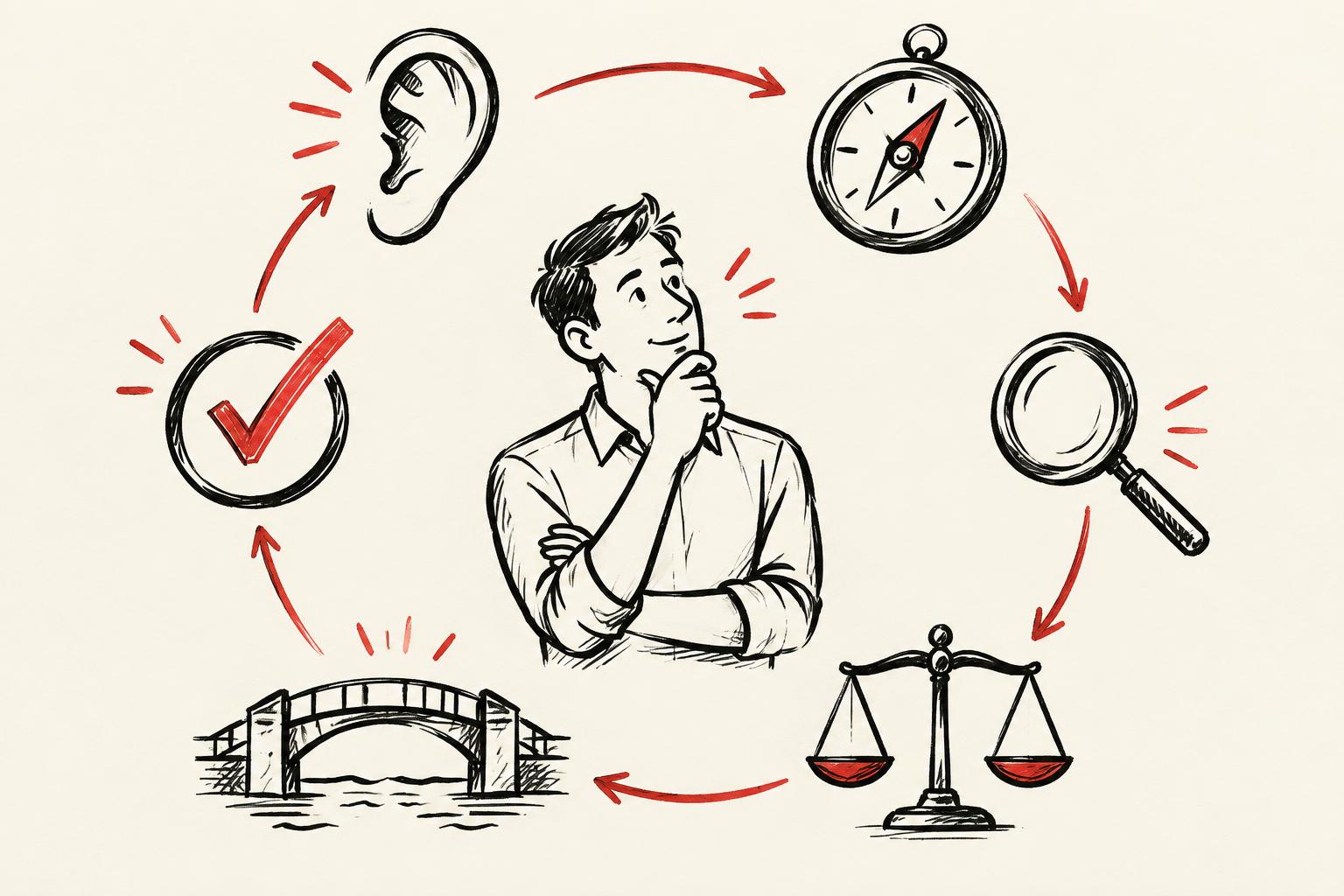
When a buyer already has access to extensive information, an adviser who offers only more information may struggle to justify the engagement. The useful contribution is often choosing what matters, resolving contradictions and applying it to a particular decision.
Start by separating information gaps from judgment gaps. The buyer may need a fact, but they may instead need to decide between two plausible approaches under constraints. Those require different kinds of help.
Explain the reasoning, not just the conclusion. Which objectives matter most? Which assumptions drive the recommendation? What tradeoff is being accepted? This makes the advice easier to evaluate and implement.
Judgment should still be accountable to evidence. Calling something professional intuition does not exempt it from examination. Where experience informs a view, describe the pattern and the limits of comparison.
Package the work around the decision it supports. A review that helps a leadership team choose a feasible implementation sequence may be more intelligible than a promise to provide strategic insight. The client can see what will be different at the end.
There is a risk of making judgment sound mysterious. Avoid that. The value lies in disciplined attention to context and consequences, not in presenting the adviser as someone whose conclusions cannot be questioned. Good advice leaves the buyer better able to reason, even after the adviser has gone.
Put it to work
A practical next step
Rewrite a service description around the decision the client will be able to make. State the evidence examined, the tradeoffs addressed and the output that records the reasoning.
Proposed practice, not a completed experiment. Illustrations are not client testimony.
Sources & limits
This essay is editorial interpretation from the supplied manuscript, not an empirical research report. No external study is cited for its recommendations.
Source: The work of winning trust, editorial review edition, 15 October 2026, p. 121. No publication history is inferred from its sequence dates.