
Tools & judgment · Essay 101
Expertise must become inspectable
The Accidental Salesman Editorial Desk · 2 min read · Published 15 October 2026
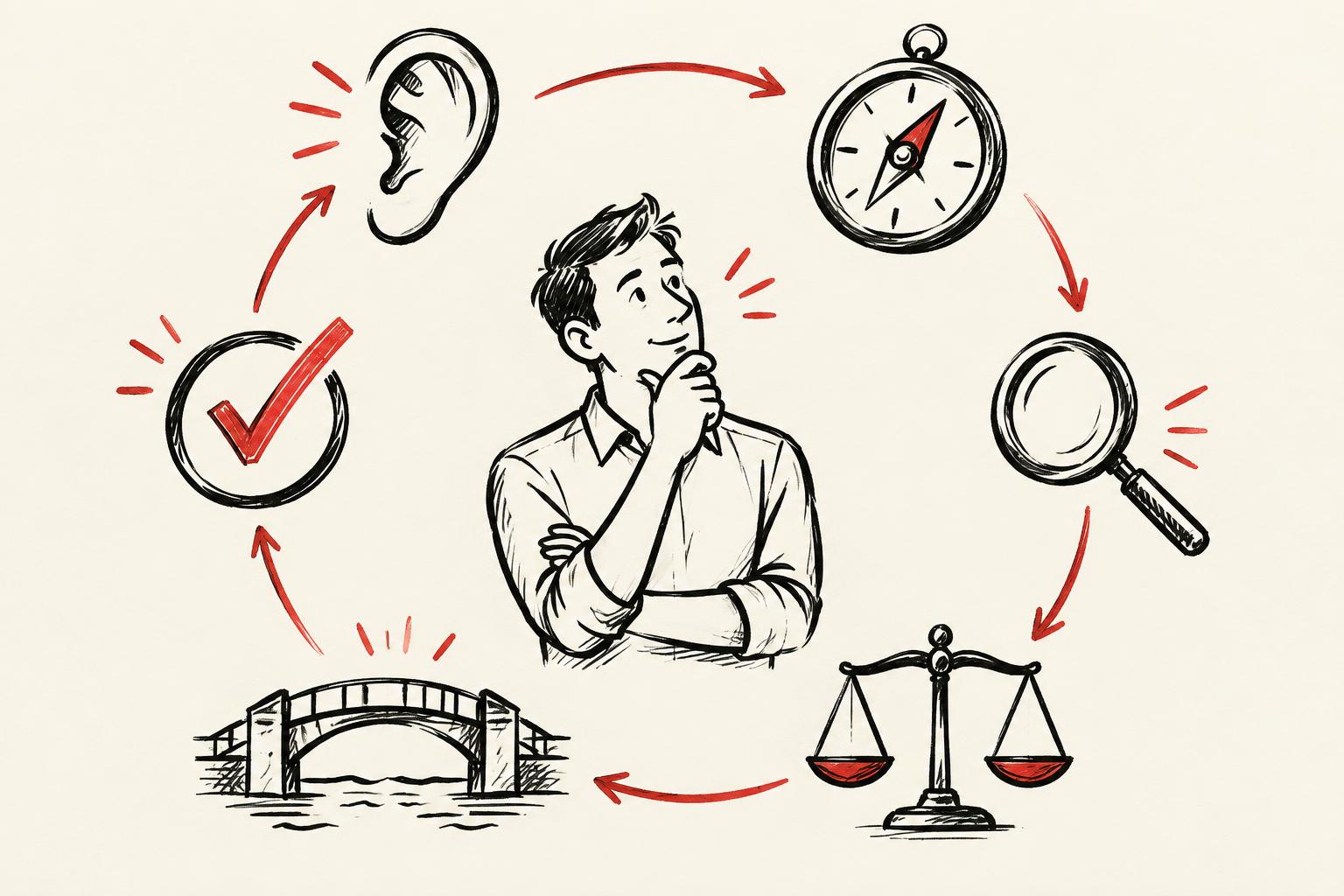
A claim of expertise is easy to make. Buyers need ways to examine it before committing to a relationship. Credentials can help, but they rarely show how an adviser will reason through the buyer's particular problem.
Make the work visible at an appropriate level. A well-explained case, a sample diagnostic, a decision framework or a discussion of a failed approach can reveal judgment. The material should show how evidence leads to a recommendation, including the limits.
Avoid confusing volume with substance. A library of articles may repeat familiar advice without exposing any difficult decision. One careful account of a tradeoff can be more informative than a hundred broad claims about transformation.
Show what would change your mind. An expert who can describe the conditions under which a method should not be used gives the buyer a way to assess fit. Universal recommendations often conceal the context that makes experience valuable.
Protect confidential information while preserving useful detail. An anonymised example can still describe the decision, constraints and reasoning. If those elements cannot be shared, choose another form of demonstration rather than inventing a cleaner case.
Inspectable expertise supports both sales and editorial credibility. It allows readers to judge the work rather than rely entirely on the author's status. The publication's task is to make that judgment possible through clear reasoning, relevant evidence and honest boundaries.
Put it to work
A practical next step
Select one major claim of expertise and attach an artefact that lets a buyer inspect it. Ask whether the artefact reveals reasoning or merely repeats the claim in a different format.
Proposed practice, not a completed experiment. Illustrations are not client testimony.
Sources & limits
This essay is editorial interpretation from the supplied manuscript, not an empirical research report. No external study is cited for its recommendations.
Source: The work of winning trust, editorial review edition, 15 October 2026, p. 120. No publication history is inferred from its sequence dates.