
Discovery & diagnosis · Essay 048
The buyer's language is evidence
The Accidental Salesman Editorial Desk · 2 min read · Published 15 October 2026
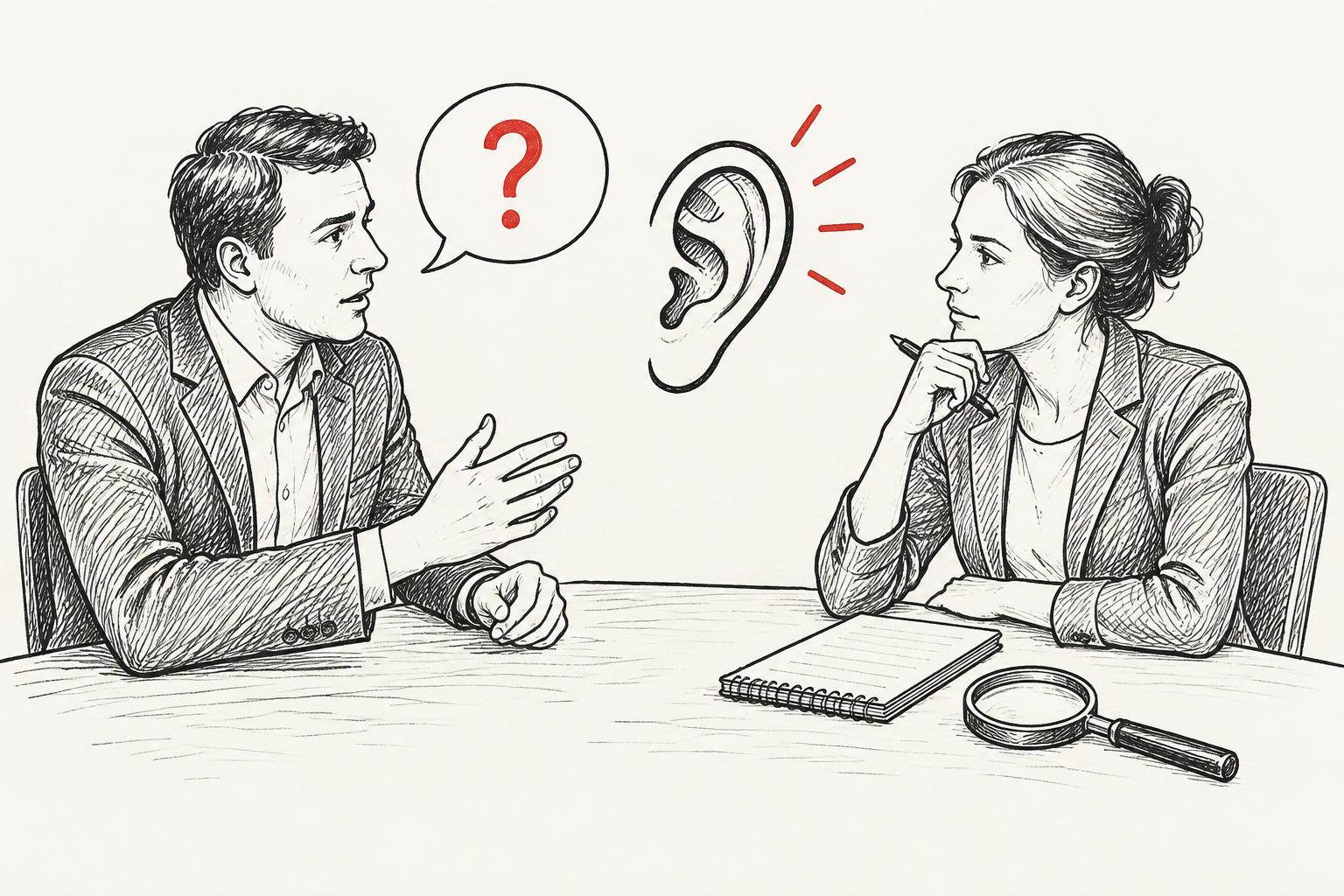
When a prospect says the team is "drowning in exceptions", an adviser may translate the phrase into a polished category such as process optimisation. The translation can be useful internally, but it may erase the experience that makes the problem important.
Keep the original language alongside your interpretation. Ask for examples and define what the phrase means operationally. Does it refer to volume, unpredictability, unclear authority or the emotional burden of constant interruption?
The distinction improves proposals. A client is more likely to recognise a problem statement grounded in their actual situation than one assembled from industry vocabulary. Recognition, however, is not the same as agreement. Read the summary back and invite corrections.
Do not imitate the buyer's language mechanically. Repeating a phrase can sound attentive while concealing a misunderstanding. The test is whether you can explain the underlying process and consequences, not whether you copied the wording into the opening slide.
There is also a useful research habit here. Across conversations, recurring language can reveal how buyers organise a problem. Record it with context rather than treating the most colourful quotation as representative of everyone.
Language is a clue, not a verdict. One frustrated manager's description may differ from that of the people doing the work. Bring those perspectives together before deciding which version should guide the engagement.
Put it to work
A practical next step
Maintain a small vocabulary log with the buyer's phrase, the concrete example behind it and your interpretation. Use it to improve clarity, while keeping quotations anonymous unless permission is given.
Proposed practice, not a completed experiment. Illustrations are not client testimony.
Sources & limits
This essay is editorial interpretation from the supplied manuscript, not an empirical research report. No external study is cited for its recommendations.
Source: The work of winning trust, editorial review edition, 15 October 2026, p. 61. No publication history is inferred from its sequence dates.