
Clients & capability · Essay 126
Why Sales Roleplay Is Becoming an Important Part of Modern Sales Coaching
The Accidental Salesman Editorial Desk · 9 min read · Published 12 November 2026
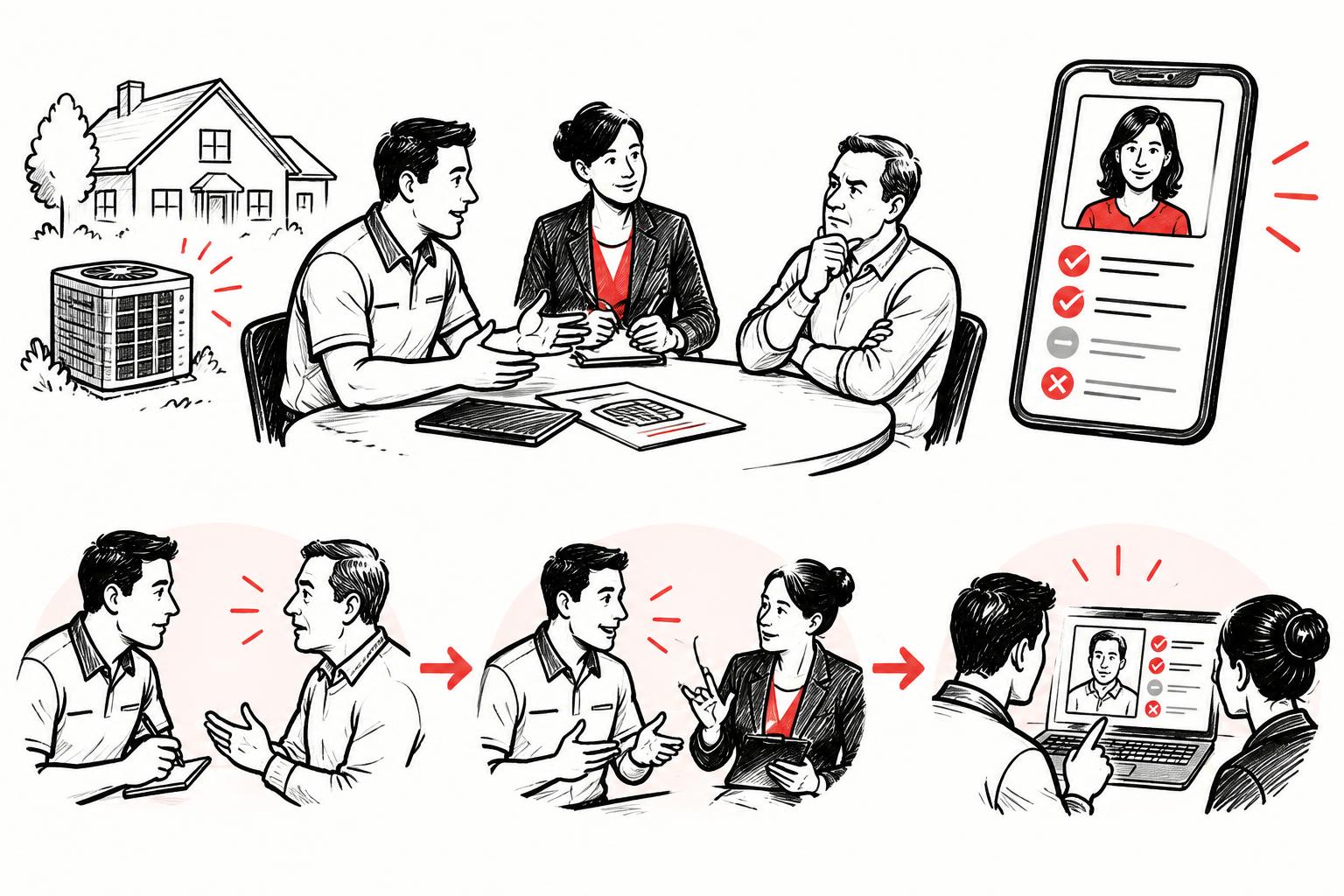
An HVAC comfort advisor knows the equipment specifications. Then a homeowner says, “The other company is cheaper, and my spouse wants to wait.” The advisor rushes into financing instead of asking what the homeowner is comparing. Product knowledge was not the problem. The conversation was.
Sales roleplay is a rehearsal of a customer conversation, followed by feedback and another attempt. It lets representatives practice judgment before a real appointment is at stake. AI makes that rehearsal easier to repeat; managers still decide what good selling looks like. That combination explains its growing relevance to modern sales coaching, without requiring a claim that software can replace experience.
This guide is AI-assisted editorial synthesis for US sales teams, not a hands-on product test. Practis is included at the requester’s suggestion as one relevant example, not as an independently ranked recommendation. Product descriptions were checked against its website on November 12, 2026; scenarios below are illustrative.
Knowing the product is not the same as handling the conversation
A salesperson can explain every feature and still miss the reason a customer hesitates. Discovery requires choosing a useful question, listening without preparing a rebuttal, and changing direction when new information appears. Objection handling requires separating a genuine constraint from uncertainty. Negotiation requires protecting value without turning the discussion into a contest.
These are observable skills, not facts to memorize. A product quiz cannot show whether a plumbing technician explains repair options calmly to a worried homeowner. A roleplay can reveal that gap, provided the simulated customer has a believable problem and the feedback addresses behavior rather than personality.
What the evidence supports, and what it does not
The strongest argument is for well-designed practice, not AI by itself. Taylor, Russ-Eft and Chan’s meta-analysis of 117 behavior-modeling training studies found larger effects on learning than on job behavior, and smaller effects still on business results. Skills and job-behavior effects remained stable or increased over time. That supports demonstrating a skill, rehearsing it and reviewing it, but does not establish a sales conversion lift from a particular platform [R155].
Sales-specific work by Koponen and Julkunen describes realistic client cases, psychological safety and structured debriefing in a Sales Theatre Workshop. It is an instructional framework and workshop account, not a controlled trial of AI coaching [R156]. The practical takeaway: repetition needs context and reflection. More attempts, or a higher simulation score, do not automatically mean better customer outcomes.
Five conversations worth rehearsing
Discovery: a home improvement consultant hears, “We want new windows.” Practice asking what is wrong with the current ones, which rooms matter, and who will help decide. The aim is to understand the job before opening the catalog.
Product demonstrations: an HVAC advisor explains two options using approved specifications. Have the homeowner interrupt with a comfort concern. Can the rep connect the explanation to that concern without promising savings the company cannot substantiate?
Objection handling: a plumbing customer says the quote is too high. Practice acknowledging the concern and asking about the comparison before describing scope, labor and exclusions. A discount is not the only possible response.
Negotiation: an insurance prospect wants a lower premium. Rehearse explaining how an approved change in coverage or deductible affects the choice, within the representative’s authority. Never invent coverage or treat every objection as something to overcome.
Closing: a homeowner needs to consult a partner. Practice summarizing what remains unresolved and arranging an agreed next step. A clear follow-up can be a better outcome than pushing for a signature. Good roleplay includes respectful exits and unsuitable buyers, not only wins.
Manager-led roleplay versus AI-powered sales roleplay
Manager-led practice brings context. A manager knows the service territory, recurring complaints, approved offers and what happened on yesterday’s ride-along. They can demonstrate a better response and explain why it fits. The constraints are scheduling, inconsistent feedback and the awkwardness of performing in front of colleagues.
AI-powered roleplay offers another practice partner when a manager is unavailable. Depending on the platform, teams can define simulated buyers, repeat scenarios and receive rubric-based feedback. Its advantage is practice access and structure, not automatic objectivity. A flawed scenario can reward an answer that would fail with a customer.
Use both for different jobs: the manager demonstrates and calibrates the skill; the rep rehearses between coaching sessions; the manager checks a sample and connects learning to field experience. Avoid replacing useful conversation with a dashboard review.
How repeated practice becomes useful feedback
Give each rehearsal one primary goal. “Handle objections better” is too broad. “Ask one clarifying question before responding to a price objection” is specific enough to observe and retry. Keep product facts, authority limits and the customer’s underlying concern in the scenario brief.
After the attempt, identify the exact moment that matters. For example: “When I mentioned cost, you listed financing before asking about my budget.” Demonstrate an alternative, then repeat with slightly different wording or a different buyer concern. Otherwise, the rep may learn the simulator’s preferred answer rather than the skill.
Ask the rep what they noticed before giving the verdict. Feedback should explain a next action, not simply produce a score. This also helps managers discover when the scoring standard is ambiguous or when an apparently weak answer was reasonable in context.
Practis as one example of a readiness-focused platform
Practis describes a workflow combining AI roleplay, structured practice, coaching and readiness analytics. Its current website presents scenario definition around a role, customer moment and performance standard, followed by simulated conversation, review of an observable gap and assessment against an approved rubric [R157].
That connects directly to a field-sales problem: managers cannot attend every doorstep conversation or in-home consultation. The site describes practice for home improvement, HVAC, pest and lawn, and insurance contexts, and views of progress and coaching priorities across individuals and teams [R157]. A manager could use that workflow to assign a price-objection rehearsal, inspect the response and choose the next lesson.
These are vendor descriptions, not independently verified learning or revenue effects. The important evaluation questions are whether scenarios match your approved offers, whether managers can inspect feedback, and whether improvement appears in customer conversations. Confirm your package, data handling and review process before adopting it; published customer examples do not guarantee higher conversion rates.
Use observations to identify individual skill gaps
Two reps may lose similar appointments for different reasons. One answers before understanding the concern. Another discovers the concern accurately but gives a confusing explanation. Assigning both the same closing drill wastes time.
Record a small set of behaviors: discovery, listening, explanation accuracy, response to objections and agreed next steps. Note evidence from the attempt rather than a label such as “not confident.” Review several scenarios before drawing conclusions. A single difficult simulation may reflect unfamiliar content, an accessibility barrier or a poor scenario.
Where AI provides scores, compare a sample with manager judgment. Discuss disagreements and repair the rubric. Treat coaching records as sensitive employee information, with defined access and retention. Do not quietly turn a developmental exercise into an automated employment decision.
Readiness is a checkpoint, not a lifetime certificate
Before a new hire visits customers, ask them to demonstrate a small set of essential conversations using current information. Readiness should include accurate explanations, recognition of authority limits and knowing when to seek help, not merely sounding fluent.
Repeat relevant practice when prices, products, financing terms or customer concerns change. Experienced reps need development too. An insurance renewal conversation or a commercial service negotiation can expose a gap that an introductory pitch never reveals.
Check transfer through ride-alongs, manager debriefs and consented customer-conversation review where appropriate. Compare similar opportunities and include cancellations, complaints and margin alongside conversion. Lead quality, seasonality and pricing can change results independently of coaching.
Where AI roleplay stops being a good substitute
A simulator does not fully reproduce a noisy kitchen, a stressed homeowner, physical inspection or the history behind a relationship. It may be too agreeable, miss an inaccurate statement or penalize a good unscripted answer. NIST’s generative-AI risk profile identifies confabulation and automation bias as risks; a polished response is not proof of accuracy [R103].
Use fictional customer details and approved reference material. Do not upload identifiable customer records without authorization and appropriate safeguards. In regulated conversations, have qualified people verify content. Human coaching and real customer experience remain essential because selling involves responsibility, not just conversational fluency.
A practical starting point for sales managers
Choose one recurring conversation rather than launching a company-wide scoring program. Ask reps for realistic objections, demonstrate a good and a poor response, then let them rehearse privately. Review a sample together and revise the scenario if it feels artificial.
Judge the pilot by whether reps demonstrate the target behavior in suitable real conversations, not by minutes logged. Keep a manager available for questions. For broader evaluation criteria, see our AI field-sales coaching guide.
Frequently asked questions
What is sales roleplay? It is a simulated buyer conversation followed by feedback and another attempt, used to develop specific selling skills before or between customer interactions.
Can AI sales roleplay replace a sales manager? No. It can expand practice access, but managers set standards, verify content, interpret context and coach real-world judgment.
How often should reps practice? Use short sessions tied to a current skill gap or upcoming conversation. There is no universally proven session frequency for every sales team.
Does roleplay improve conversion rates? Well-designed practice can support skill development. Conversion effects must be measured in your own context; neither activity counts nor vendor claims establish guaranteed gains.
Is roleplay useful for experienced field reps? Yes, as a development tool for unfamiliar objections, changed offers and complex conversations. It should challenge judgment rather than repeat an introductory script.
How do managers make roleplay less awkward? Explain the purpose, use believable scenarios, allow private rehearsal and focus feedback on one changeable behavior rather than public rankings.
The point is a better next customer conversation
Sales roleplay matters when it closes the distance between knowing what to say and responding well to a person. AI can make practice easier to access. Managers make it relevant and accountable. The useful outcome is not a rep who beats the simulator, but one who listens, explains accurately and helps a customer reach an informed decision.
Put it to work
A practical next step
Choose one objection from this week’s appointments. Write a fictional buyer brief, identify one behavior to improve, and rehearse with a colleague. Review the exact response, change one thing and try again. At the next suitable customer visit, look for that behavior rather than trying to reproduce the script.
Proposed practice, not a completed experiment. Illustrations are not client testimony.
Sources & limits
Meta-analysis of 117 training studies, with effects differing across learning, job behavior and business results. Not an AI sales-roleplay trial, field-sales conversion estimate or validation of a vendor; recommendations are editorial applications of the abstract.
Sales Theatre Workshop instructional framework and account emphasizing authentic cases, psychological safety and structured debriefing. Abstract reviewed directly; not a randomized AI-coaching trial or evidence of guaranteed commercial outcomes.
Current official descriptions of scenarios, approved rubrics, coaching observations, analytics and industry contexts. Included by request as a neutral example, not an independently ranked recommendation. No hands-on test, scoring validation or customer-outcome audit performed; actual package and data terms require confirmation.
Voluntary cross-sector risk guidance on confabulation, privacy and automation bias; not a sales-specific law, certification or guarantee that reviewed AI output is accurate.
Editorial synthesis published 12 November 2026. Research is linked above; examples and the practical exercise are editorial applications, not reported outcomes.