
Evidence & experiments · Essay 093
A channel deserves credit for its contribution
The Accidental Salesman Editorial Desk · 2 min read · Published 15 October 2026
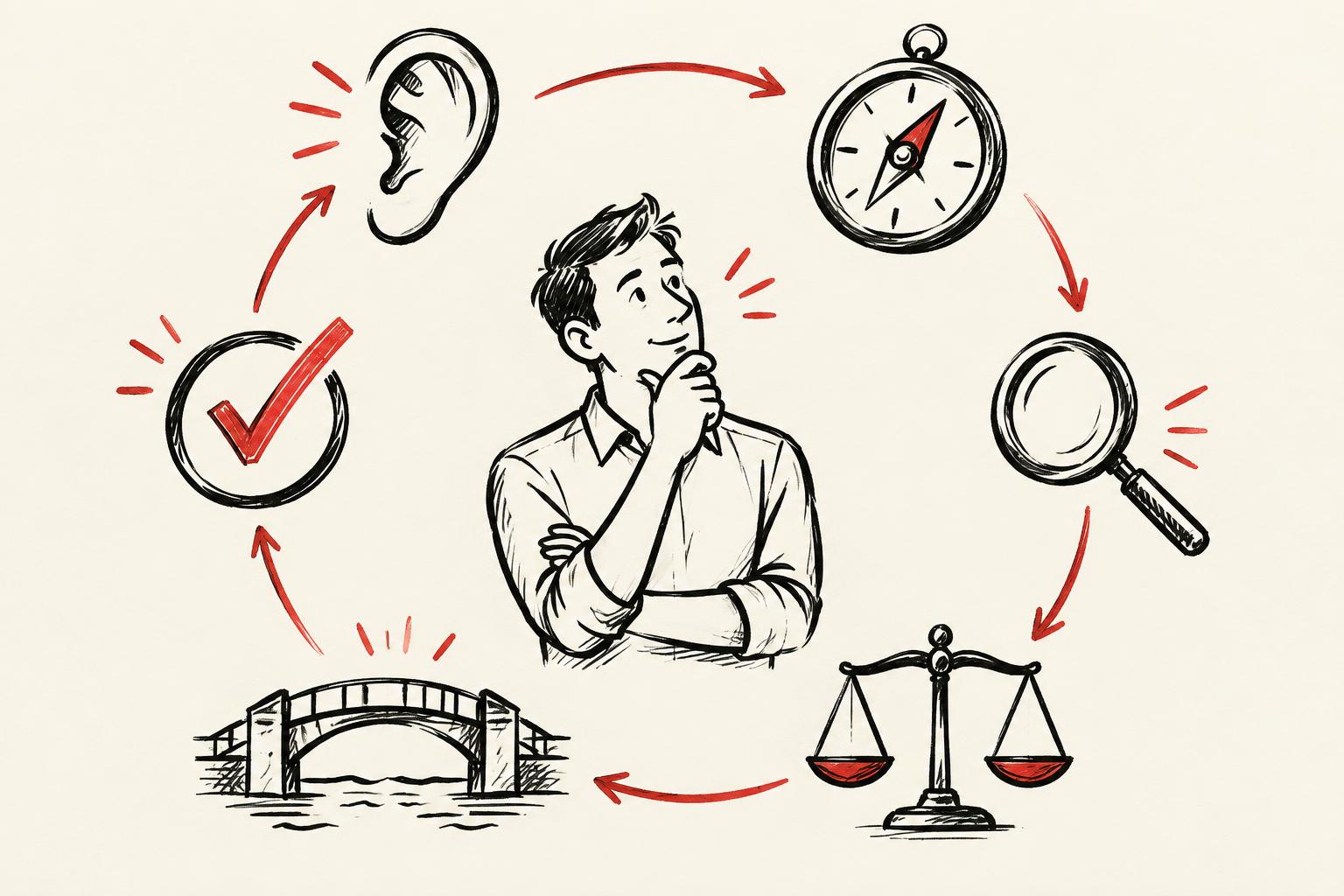
A buyer may read an article, hear a referral, attend a workshop and later submit a website form. Assigning the entire sale to the form creates a tidy report and an incomplete explanation.
Record the known path without pretending to observe everything. Ask buyers how they first encountered the firm and what influenced their decision. Their recollection is useful but imperfect, so keep it alongside available records rather than treating it as a definitive attribution system.
Different channels can serve different jobs. Content may establish credibility, referrals may create access and events may deepen understanding. Evaluating each only by immediate form submissions can understate its contribution.
At the same time, avoid giving every activity unlimited credit for "awareness". A channel should have an intended role and some evidence that it performs that role. Relevant readership, qualified conversations or repeated mentions by buyers can support the case, with appropriate limits.
Use experiments where practical. A bounded change in distribution or event format can provide more useful evidence than an elaborate attribution model built on sparse data. Preserve the context so seasonal or audience differences are not mistaken for channel effects.
For a small firm, the best system may be a careful source history and periodic review. The aim is to allocate effort more sensibly, not to produce a mathematically precise story from information the business does not have.
Put it to work
A practical next step
Add "first heard of us" and "what helped you decide" to suitable buyer conversations. Review the answers with source records and look for contributions that a last-touch report misses.
Proposed practice, not a completed experiment. Illustrations are not client testimony.
Sources & limits
This essay is editorial interpretation from the supplied manuscript, not an empirical research report. No external study is cited for its recommendations.
Source: The work of winning trust, editorial review edition, 15 October 2026, p. 111. No publication history is inferred from its sequence dates.