
Evidence & experiments · Essay 055
An experiment begins with a decision
The Accidental Salesman Editorial Desk · 2 min read · Published 15 October 2026
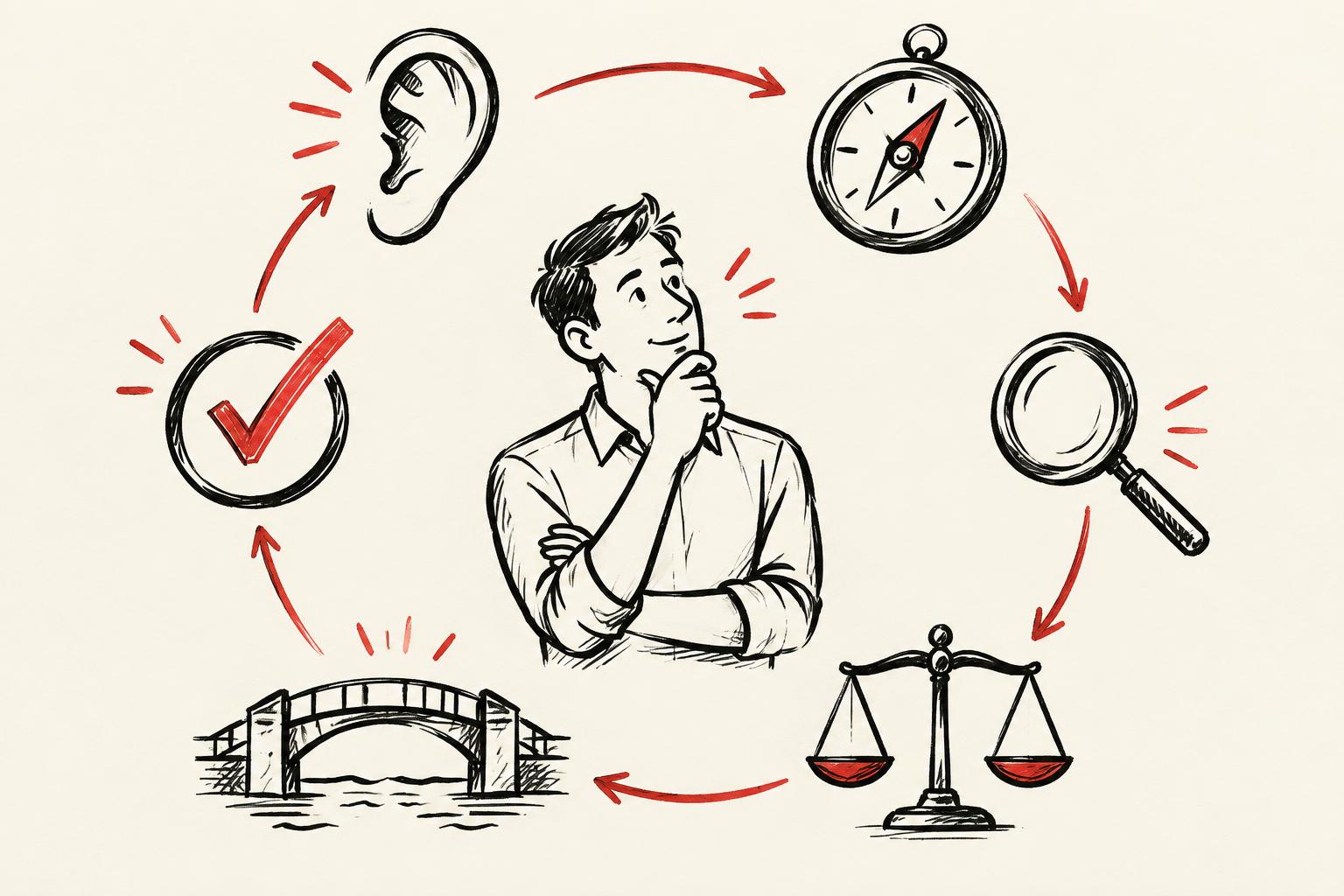
"Let's test it" sounds disciplined, but a test without a decision attached can become another activity to report. Before changing a message, offer or process, state what the result will help you choose.
Suppose a consultancy wants to know whether sending a short agenda before discovery calls improves the usefulness of those calls. The decision is whether to make that preparation a standard step. The relevant outcome might be clearer problem definition or an agreed next action, rather than the number of replies to the agenda email.
Write the hypothesis in advance and identify a plausible reason it could be wrong. An agenda may help prepared buyers while discouraging those who are still exploring. That possibility should shape what you observe.
Choose a comparison that answers the question. If the new process is used only with your best prospects, its results cannot fairly be compared with the rest of the pipeline. Random assignment can help when feasible; otherwise describe how groups differ and limit the conclusion.
Set a review point before starting. Small professional firms rarely have enough opportunities for rapid, precise statistical conclusions. A test can still improve practice if the result is treated as directional and combined with careful observation.
The outcome may be to continue, revise or stop. A useful experiment makes all three legitimate. If the team is committed to the change regardless of results, call it an implementation and monitor it honestly.
Put it to work
A practical next step
Write a test card with decision, hypothesis, comparison, primary outcome, guardrail and review date. Have someone outside the project identify one alternative explanation before the test begins.
Proposed practice, not a completed experiment. Illustrations are not client testimony.
Sources & limits
This essay is editorial interpretation from the supplied manuscript, not an empirical research report. No external study is cited for its recommendations.
Source: The work of winning trust, editorial review edition, 15 October 2026, p. 69. No publication history is inferred from its sequence dates.