
Clients & capability · Essay 135
The Rise of Self-Educated Buyers: What Sales Teams Need to Change
The Accidental Salesman Editorial Desk · 13 min read · Published 27 November 2026
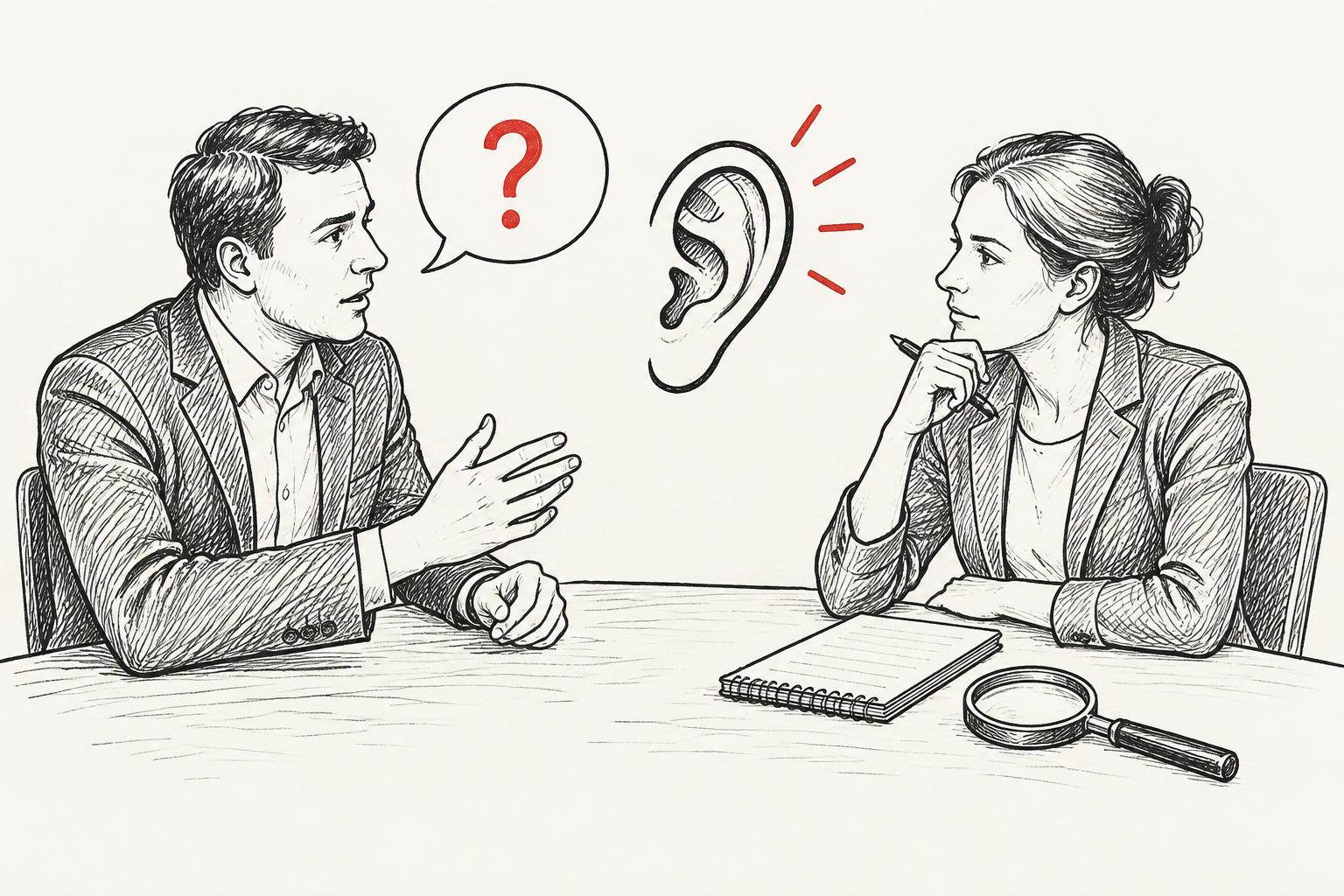
The customer arrives with a shortlist, a comparison chart and an opinion. Your salesperson arrives with a presentation designed to explain the category from the beginning. Ten minutes later, both are wondering why the meeting feels difficult.
This is not necessarily a difficult customer or a poorly prepared seller. It is often a mismatch between the work the buyer has already done and the work the sales team is trained to deliver. Information that once earned a meeting is now available before anyone books one. The buyer wants help with the remaining uncertainty; the seller is still explaining what the buyer already knows.
Self-educated buyers have not made selling irrelevant. They have made information-only selling less useful. For US sales leaders, the practical question is not how to reclaim control of the journey. It is how to make the team valuable inside a journey the customer increasingly directs. This article focuses on operating changes, not another pitch script. Research findings are cited; the business situations and proposed measures are illustrative, not reported customer results.
What the latest buyer research establishes—and what it does not
In a March 2026 release, Gartner reported that 67% of surveyed B2B buyers preferred a rep-free experience and 45% said they had used AI during a recent purchase. The underlying survey involved 646 B2B buyers in August and September 2025. These are reported preferences and behavior in a particular business-buyer sample, not proof that two-thirds of all Americans refuse sales help or that AI caused their buying decisions [R174].
Gartner’s June 2025 release, based on a separate survey of 632 B2B buyers in August and September 2024, reported 61% overall rep-free preference. Crucially, buyers preferred self-service for general information but seller input for contextual tasks, such as determining whether a solution fitted their company. The two releases suggest a reason to revisit sales practices; without the full methods, they should not be treated as a precise, like-for-like growth rate [R162][R174].
Independent learning also extends beyond conventional search. Pew Research Center reported in June 2025 that 34% of US adults had used ChatGPT. That establishes use of one assistant, not how many people used it to buy or whether its recommendations were correct [R164]. The defensible conclusion is modest: teams should be prepared for buyers who arrive with independently assembled information, including AI summaries. They should not assume every buyer does.
Self-educated does not mean decision-ready
A buyer can know the vocabulary and still lack the context. Reading about software integrations is different from knowing whether an integration handles your company’s particular workflow. Comparing home-service quotes is different from recognizing that one excludes the preparation work another includes.
It helps to distinguish three things: information, interpretation and decision confidence. Information is what the buyer has collected. Interpretation is what they believe it means for their situation. Decision confidence is their readiness to act with the relevant tradeoffs understood. A long spreadsheet can contain plenty of the first and very little of the other two.
Gartner’s 2026 release frames “value clarity” around the buyer’s specific role and business context. Its reported association between confidence and high-quality deals is not a promise that a particular confidence-building script doubles sales [R174]. A seller’s job is to help make a justified decision possible, including a decision not to buy.
Change 1: Replace the standard opening with a research handoff
The first meeting should establish where the buyer is, not force them back to the start. Ask: “What have you already looked at?” “Which options are you comparing?” “What seems clear, and what is still difficult to judge?” Then ask permission to focus on the gaps they identify.
In an illustrative payroll-software meeting, a business owner says they have compared prices and need to understand state-tax handling and migration. A useful seller checks those requirements and offers to address them first. An unhelpful seller launches into a twenty-slide company overview. The second approach makes the buyer repeat the effort of finding what matters.
Add a brief research handoff to the team’s meeting preparation: sources considered, current assumptions, unresolved questions and the decision the buyer wants help making. Keep it light enough to use. A compulsory questionnaire that delays a straightforward answer defeats the purpose. For individual preparation, see our seven-step sales conversation guide.
Change 2: Qualify the decision, not just the prospect
Budget, authority and timing still matter, but they do not tell you whether the buyer’s evaluation is sound. A person may have a budget and an urgent deadline while comparing the wrong packages. Another may be months from purchase but working through a serious, well-defined change.
Alongside commercial qualification, ask what would count as a good result, which constraints cannot move and what evidence is needed before committing. Find out whether the buyer is choosing a supplier, deciding whether to change at all or building an internal case for investment. Those are different conversations.
Do not turn research activity into assumed buying intent. Someone downloading a checklist might be learning, checking an incumbent or helping a colleague. Record the buyer’s stated purpose separately from inferred signals. Qualification should make the next step more appropriate, not manufacture urgency from a page visit.
Change 3: Build a shared evidence library instead of a bigger slide deck
Sales content often explains why the company is attractive. Research-first buyers also need to know when it fits, when it does not and what happens after the contract. Create concise answers to recurring questions about scope, exclusions, implementation, support, compatibility, cancellation and cost drivers.
Every important claim should have an owner, an approved source and a review point. Separate a documented product capability from a customer-reported outcome and from a forecast. If a case study reports reduced administration time, identify the circumstances and measurement rather than presenting the figure as an expected result for everyone.
This matters for reviews as well as presentations. The FTC’s consumer-reviews rule addresses specified fake reviews, deceptive company-controlled review sites and certain undisclosed relationships, among other practices. It took effect on 21 October 2024; it is not a guarantee that any particular review is authentic [R163]. Never invent proof to meet a buyer’s demand for evidence.
Make basic factual answers available without forcing contact wherever practical. Reserve a conversation for diagnosis, exceptions and judgment. Detailed design can still be paid work; transparency does not require unlimited free consulting or disclosure of confidential customer material.
Change 4: Teach sellers to compare fairly and explain tradeoffs
A self-educated buyer will often ask a direct competitive question. Avoid responding with an unsupported dismissal or an irrelevant feature list. First establish what the buyer is comparing: product version, service scope, contract length, implementation responsibility and the outcomes that matter.
Consider an illustrative commercial-cleaning purchase. One quote includes consumables and cover for staff absence; another excludes both. The seller can explain that distinction without claiming the competitor is unreliable. A fair comparison lists common scope, different scope and questions that remain unanswered.
Include the incumbent and doing nothing when they are genuine alternatives. Switching carries costs: staff attention, migration, disruption and learning. A seller who ignores those costs can win agreement about features while losing the actual decision. If the buyer’s present arrangement meets their needs, acknowledge it.
Adaptive-selling research synthesizing 155 samples and more than 31,000 salespeople supports examining selling behavior in relation to customer context and performance. It does not validate this exact comparison method or authorize adjusting facts to suit a prospect [R158]. Adapt the conversation, not the truth.
Change 5: Treat AI-informed objections as claims to investigate
A buyer may arrive saying an AI assistant recommended a cheaper option, identified a risk or said your product lacks a feature. The worst responses are blind agreement and automatic dismissal. Ask what it said, which sources it used and which detail changes the decision.
Check the claim against current documentation and the relevant scope. An answer can be broadly plausible but wrong about a version, add-on, location or contract condition. NIST’s Generative AI Profile identifies risks including confabulation and automation bias; it is not evidence that all AI answers are false [R103].
A respectful correction has three parts: recognize the reasonable concern, identify the missing condition and provide evidence. “That limitation applies to the basic package; the integration you need is documented in this option” is more useful than “AI does not understand our business.” If the answer exposes a real limitation, acknowledge it.
Apply the same standard to seller-generated research. Do not paste confidential buyer documents into unapproved tools or let an assistant invent competitive facts. The team needs verification habits, not a contest between the buyer’s AI and the seller’s AI. See the playbook for AI-informed buyers for a conversation-level approach.
Change 6: Help the buying group reach a shared understanding
One enthusiastic contact is not necessarily a completed decision. Finance might worry about ongoing cost, operations about disruption and IT about data access. Each person can arrive with different research and a different definition of success.
Gartner’s historical buying-jobs framework describes overlapping tasks including problem identification, solution exploration, requirements building, validation and consensus creation. It is not a universal fixed sequence or a current estimate of buying-group size [R159]. The practical implication is to ask which tasks remain, rather than assuming a demonstration completed the evaluation.
Offer a short, shareable decision brief: the problem, agreed requirements, options considered, supporting evidence, important exclusions and unresolved questions. Give stakeholders the material relevant to their responsibility. An implementation outline may help operations more than another promotional brochure.
Do not coach a contact to hide limitations from colleagues. Help them explain the tradeoff accurately. A deal that advances because a material concern was concealed can unravel during approval or after purchase.
Change 7: Follow up with the answer the buyer is waiting for
After a useful conversation, the next message should reduce uncertainty. State what was agreed, deliver the promised evidence and identify the next step the buyer accepted. If an answer is still being checked, say who is checking it and when you expect to respond.
In an illustrative service proposal, a buyer is waiting to learn whether weekend support is included. A useful follow-up supplies the actual support terms, explains the escalation route and asks whether that resolves the requirement. A generic “just checking in” puts the burden back on the customer without answering anything.
Choose the format that makes the answer easiest to evaluate. A marked-up scope or a two-minute demonstration with approved sample data can beat a long attachment. Respect a requested pause, an opt-out and a clear no. More automation does not make an unanswered question less important. Read our guide to trust-building sales follow-ups for examples.
Change 8: Coach judgment, listening and verification
Product knowledge remains necessary, but memorizing a pitch is not enough. Practice situations where the buyer has done research, has a partly mistaken assumption or asks a question the seller cannot immediately answer. Assess how the seller investigates, listens and explains limits.
A useful rehearsal gives the seller a plausible comparison with one missing condition. The coach watches whether they notice it, ask an appropriate question and verify the answer without embarrassing the buyer. Another scenario asks the seller to explain when their own offer is not a good fit.
Listening research links salesperson listening with relationship quality and performance, but it does not establish that a particular opening causes a sale [R9]. A meta-analysis of 117 behavior-modeling training studies offers broader support for structured learning while distinguishing learning, workplace behavior and business results; it is not a trial of this coaching plan or an AI platform [R155].
Review a real conversation afterward only with appropriate permission and controls. Did the seller understand the question? Did they provide support for the answer? Did the buyer understand the next step? Coaching should reward an honest “I need to check” when that is the responsible response.
What managers should measure instead of meeting volume alone
Keep commercial measures, but add a small number of measures that expose whether the team is helping buyers decide. Record unresolved decision questions, promised answers delivered on time, next steps explicitly accepted and losses linked to unclear scope or implementation concerns.
Define each measure before interpreting it. For example, an answer is “delivered on time” only when the promised information reaches the buyer by the agreed deadline. An accepted next step requires the buyer’s agreement, not a salesperson moving an opportunity to the next stage. Avoid making a subjective confidence score look like objective proof.
Examine cancellations, early complaints and implementation surprises alongside wins. A smoother close followed by disappointment may indicate that uncertainty was concealed rather than resolved. Compare similar opportunity types and note changes in pricing, lead sources and seasonality before crediting a new process.
These are proposed operating measures, not validated universal benchmarks. A small team can begin with a weekly review of a few opportunities. The purpose is to identify repeatable friction, not create another dashboard nobody trusts.
A practical 30-day reset for a small sales team
Week one: review recent first meetings and lost opportunities. Identify which questions buyers had already answered, which assumptions caused confusion and which requested answers arrived late. Separate observed facts from the team’s guesses about why deals were lost.
Week two: update the five most useful factual answers. Assign an owner and align the website, proposal and seller guidance. Build one fair comparison outline with room for unknowns rather than a competitive battlecard full of unsupported claims.
Week three: rehearse the research handoff, a respectful correction and a decision brief. Test the approach with a small, clearly defined set of relevant opportunities. Do not force it onto customers whose immediate needs call for a simpler interaction.
Week four: review what changed. Did customers repeat fewer questions? Were promised answers delivered? Which concerns remained unresolved? Expand what appears helpful and revise what creates friction. Thirty days is an editorial trial period, not a promise of measurable revenue growth.
Five FAQs about selling to self-educated buyers
Are self-educated buyers always harder to sell to? No. They may have clearer requirements and useful comparison work already completed. Difficulty arises when research is inaccurate, criteria conflict or the sales process ignores their starting point. Assess the specific decision rather than labeling the customer.
Should we stop giving product demonstrations? No. Demonstrate the workflows and tradeoffs that address the buyer’s actual requirements. Ask what they need to see first and distinguish standard capability from configuration, add-ons and services.
How much information should be available without speaking to sales? Publish factual, approved answers that help buyers judge fit, including important limitations and cost drivers. Protect confidential information and explain when a tailored assessment requires a paid engagement.
What should a seller do when a buyer’s research contradicts our claims? Identify the exact disagreement, check the version and source, and provide current evidence. Correct your own materials if they are wrong. Do not make an unsupported rebuttal simply because the claim threatens a deal.
Does this approach suit US consumer sales as well as B2B? The practices can be adapted to purchases requiring explanation, such as home services or complex equipment. The B2B survey percentages should not be applied to consumers. Match the level of diagnosis to the decision’s risk and complexity.
The team’s job is to make the remaining uncertainty smaller
A research-first buyer does not need a salesperson to prove that information exists. They need help deciding which information matters, which claims deserve confidence and what a purchase would mean in their own circumstances.
Build the sales process around that work. Begin where the buyer is, make evidence inspectable, compare fairly and keep promises about unanswered questions. The strongest modern team is not the one that overwhelms a well-prepared customer. It is the one that makes the customer’s preparation more useful.
Put it to work
A practical next step
Choose five recent opportunities and record the buyer’s prior research, their main unresolved question, the evidence your team supplied and the next step they actually accepted. Select one recurring information gap to fix and one conversation skill to rehearse. Assign an owner to verify the answer, then review comparable opportunities after a month without treating a small sample as proof of revenue impact.
Proposed practice, not a completed experiment. Illustrations are not client testimony.
Sources & limits
Official indexed release reviewed 27 November 2026; direct retrieval required human verification. Survey of 646 B2B buyers conducted August–September 2025 reports 67% rep-free preference and 45% AI use during a recent purchase. Not a US-only consumer estimate, a live November survey, proof of AI causation or a like-for-like growth rate versus the earlier sample. Reported confidence/deal-quality association is not a causal revenue guarantee; full underlying methods were not accessed.
Official release reviewed through indexed text; direct retrieval restricted. Survey of 632 B2B buyers conducted August–September 2024: 61% overall rep-free preference and 73% avoidance of irrelevant outreach. Distinguishes general-information self-service from seller-preferred contextual tasks. Not a November 2026 survey, US-only consumer estimate, causal experiment or evidence that every purchase is researched.
Official indexed final-rule text reviewed; direct site returned a verification page. Addresses specified fake reviews, sentiment-conditioned review purchases, insider disclosures, falsely independent company-controlled review sites and review suppression; effective 21 October 2024. Not a guarantee of review authenticity or individual legal advice; exact provisions and applicable knowledge standards matter.
National survey of US adults on ChatGPT use only. Not a measure of purchase research, business-buyer behavior, other assistants or November 2026 usage.
Publisher abstract reviewed: synthesis of 155 samples and more than 31,000 salespeople, including performance measures and a structural model. Meta-analytic associations do not establish randomized causal effects of the seven editorial corrections, a universal script or guaranteed deal outcomes.
Public analyst press release identifies six buying jobs and ongoing validation and consensus creation. Historical framework, not a 2026 survey or evidence that every consumer or business sale has the same participants or process.
Meta-analysis of 117 training studies, with effects differing across learning, job behavior and business results. Not an AI sales-roleplay trial, field-sales conversion estimate or validation of a vendor; recommendations are editorial applications of the abstract.
Voluntary cross-sector risk guidance on confabulation, privacy and automation bias; not a sales-specific law, certification or guarantee that reviewed AI output is accurate.
Meta-analytic model of salesperson listening; associations and synthesized relationships do not establish that an example email causes better outcomes.
Editorial synthesis published 27 November 2026. Research is linked above; examples and the practical exercise are editorial applications, not reported outcomes.